Rhodiola rosea is an herb that has garnered interest, particularly for its adaptogenic properties. When considering Rhodiola rosea, it’s helpful to understand the specific compounds that are thought to contribute to its observed effects.
Among the many phytochemicals in Rhodiola rosea, two groups of compounds are often highlighted: salidroside and the rosavins. These are frequently standardized in Rhodiola rosea extracts and are considered important for the herb’s potential actions in the body.
What Are Salidroside and Rosavins?
Salidroside and rosavins are naturally occurring compounds found in Rhodiola rosea. Rosavins represent a group of compounds that include rosavin, rosin, and rosarin [1]. These active compounds are often concentrated in the plant’s roots [2]. The specific balance and concentration of these compounds can vary depending on factors such as the plant’s origin and cultivation methods [3].
Both salidroside and rosavins are considered key contributors to Rhodiola rosea’s adaptogenic qualities. Adaptogens are substances that may help the body adapt to various stressors [1]. Understanding the roles of these individual compounds can provide insight into how Rhodiola rosea may support various bodily functions during periods of physiological change, such as midlife and menopause.
The Role of Rosavins in Rhodiola Rosea
Rosavins are a unique group of compounds primarily found in Rhodiola rosea. Research suggests rosavins may contribute to various biological activities. For example, rosavin has been explored for its potential protective effects against radiation-induced intestinal injury [4].

Additionally, rosavin, alongside salidroside, has been observed to attenuate microglia injury via the nuclear factor κ-B signaling pathway [5]. This suggests a potential role in cellular processes. The presence of rosavins is often a marker for the quality and authenticity of Rhodiola rosea extracts [2].

The Role of Salidroside in Rhodiola Rosea
Salidroside is another prominent active compound in Rhodiola rosea and is also found in other Rhodiola species [6]. Like rosavins, salidroside has been the subject of various studies exploring its potential effects. It is considered a significant adaptogenic constituent [7].
Research indicates that salidroside may play a role in modulating inflammatory processes. For instance, it has been studied in a CRH-activated BV2 cell model, where it showed an ability to modulate these processes [8]. Furthermore, salidroside has been observed to contribute to the attenuation of microglia injury via the nuclear factor κ-B signaling pathway, similar to rosavin [5].
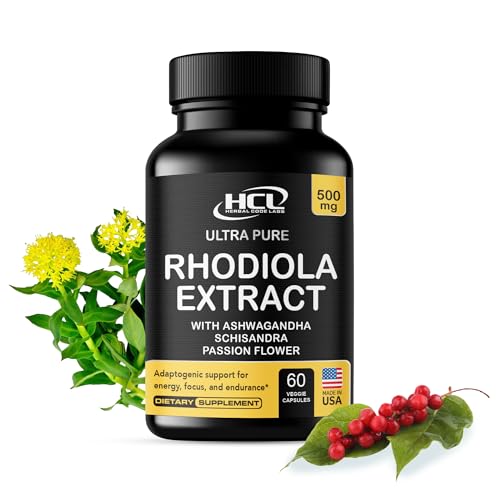
Salidroside has also been investigated in the context of oxidative stress. Long-term supplementation with Rhodiola rosea, which contains salidroside, was observed to attenuate exhaustive swimming-evoked oxidative stress in rats [9]. This suggests a potential influence on cellular responses to physical demands.

Synergy: How Salidroside and Rosavins May Work Together
While both salidroside and rosavins are individually studied, it is often hypothesized that the overall effects of Rhodiola rosea may stem from the synergistic action of its various compounds, rather than just one or two isolated constituents [10]. This concept suggests that the complex blend of phytochemicals in the whole plant extract may offer a broader spectrum of potential benefits than individual compounds alone.
The adaptogenic potential of Rhodiola rosea, which is of interest to women navigating midlife, is likely influenced by the combined presence and interactions of these active compounds. The balance between salidroside and the total rosavins is often considered when evaluating Rhodiola rosea extracts. Standardized extracts typically aim for a specific ratio of these compounds to ensure consistency [2].
References
- A literature review of the studies concerning selected plant-derived adaptogens and their general function in body with a focus on animal studies. Phytomedicine : international journal of phytotherapy and phytopharmacology, 2022
- Phytochemical profile and anti-inflammatory activity of a commercially available Rhodiola rosea root extract. Fitoterapia, 2023
- Approaches of Rhodiola kirilowii and Rhodiola rosea field cultivation in Poland and their potential health benefits. Annals of agricultural and environmental medicine : AAEM, 2015
- The Protective Effect of Rosavin from Rhodiola rosea on Radiation-Induced Intestinal Injury. Chemistry & biodiversity, 2020
- Rosavin and salidroside attenuate microglia injury via nuclear factor κ-B signaling pathway. The Journal of pharmacy and pharmacology, 2026
- Identification of a novel UDP-glycosyltransferase gene from Rhodiola rosea and its expression during biotransformation of upstream precursors in callus culture. International journal of biological macromolecules, 2019
- Systemic and Anticancer Potential of Adaptogenic Constituents Isolated from Traditional Herbs – A Mini-Review. Anti-cancer agents in medicinal chemistry, 2022
- Rhodiola rosea L. modulates inflammatory processes in a CRH-activated BV2 cell model. Phytomedicine : international journal of phytotherapy and phytopharmacology, 2020
- Attenuation of long-term Rhodiola rosea supplementation on exhaustive swimming-evoked oxidative stress in the rat. The Chinese journal of physiology, 2009
- Rhodiola rosea as an adaptogen to enhance exercise performance: a review of the literature. The British journal of nutrition, 2024
These statements have not been evaluated by the Food and Drug Administration. This information is not intended to diagnose, treat, cure, or prevent any disease. Content is for informational purposes only and is not medical advice; consult a qualified healthcare provider before starting any supplement. As an Amazon Associate we earn from qualifying purchases.
