When considering herbal supplements like Rhodiola rosea, understanding how extracts are prepared and standardized can be helpful. Standardization aims to ensure that a product contains consistent levels of specific compounds, which are thought to contribute to the herb’s characteristics.
For Rhodiola rosea, the compounds salidroside and rosavins are often highlighted in discussions about extract quality. This article will explore what standardization means for Rhodiola rosea and why these particular compounds are often measured.
What is Herbal Extract Standardization?
Herbal extract standardization is a process designed to ensure that a particular batch of an herbal supplement contains a defined amount of specific active compounds. This helps to provide a more consistent product from batch to batch, rather than relying solely on the natural variability of the plant material itself.
The plant Rhodiola rosea contains various compounds, and researchers have focused on certain ones for their potential contributions. By standardizing extracts, manufacturers aim to offer a more predictable product for consumers [1].
The Role of Salidroside in Rhodiola Rosea
Salidroside is one of the key compounds often analyzed in Rhodiola rosea extracts. It is a phenylethanoid glycoside, and its presence is frequently used as a marker for quality and authenticity of Rhodiola rosea products [1]. Research has explored its potential effects, and its quantification is a common practice in assessing extract quality.
The levels of salidroside can vary depending on factors such as the plant’s origin, growing conditions, and the extraction method used. Therefore, standardizing for salidroside content helps ensure a more uniform product profile [1].


Rosavins: Another Important Marker
In addition to salidroside, the rosavin group of compounds (rosavin, rosarin, and rosin) are also considered significant markers for Rhodiola rosea extract quality. These compounds are specific to Rhodiola rosea and are often measured alongside salidroside in standardized extracts [1].
The ratio of rosavins to salidroside is sometimes discussed as an indicator of a high-quality Rhodiola rosea extract. For example, some commercial extracts are standardized to contain 3% rosavins and 1% salidroside [1]. This specific ratio is often cited in discussions about Rhodiola rosea product characteristics. The pharmacokinetic study of rosavin in rat plasma with ultra performance LC-MS/MS after intravenous and gavage administration provides insight into how this compound is processed in the body [2].
The ability to produce rosavin analogues from glucose using engineered Escherichia coli highlights the scientific interest in these compounds and their chemical structures [3].
Why is Standardization Important for Consumers?
For individuals considering Rhodiola rosea, understanding standardization can be beneficial. It provides a way to compare different products on the market, as a standardized extract suggests a more consistent profile of specific compounds. Without standardization, the amount of salidroside and rosavins could vary significantly between different products, making it difficult to anticipate consistent experiences.

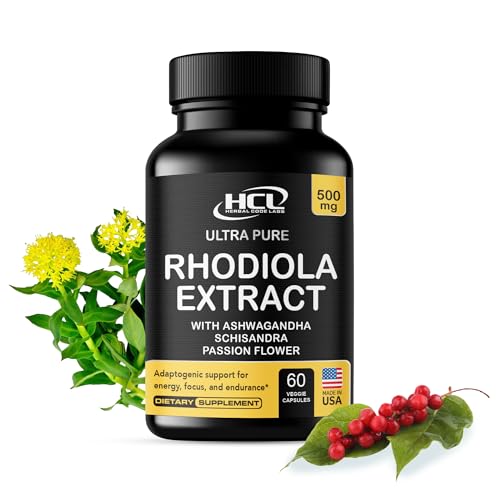
Authentication of Rhodiola species is crucial, as evidenced by studies using HPTLC chromatographic profiles to distinguish Rhodiola rosea from other species like Rhodiola quadrifida in the market [4]. This emphasizes the importance of ensuring that a product labeled as Rhodiola rosea actually contains the correct botanical species and not a substitute. Studies have assessed the quality and potential efficacy of commercial extracts by analyzing salidroside and rosavin content [1]. The authenticity and quality of Rhodiola rosea products have been a subject of research, highlighting the need for careful sourcing and manufacturing [5].
When a product specifies its salidroside and rosavin content, it provides a level of transparency about what the extract contains. This information can help consumers make more informed choices about the supplements they select.
Identifying Quality Rhodiola Rosea Extracts
When evaluating Rhodiola rosea products, looking for clear labeling that indicates the percentage of salidroside and rosavins can be a useful step. This transparency suggests that the manufacturer has taken measures to standardize their extract. For instance, an extract might be labeled as containing 3% rosavins and 1% salidroside [1].
A high-performance countercurrent chromatography method can be used to isolate and identify constituents from Rhodiola rosea [6]. This type of advanced analytical technique can contribute to the quality control and understanding of the compounds present in Rhodiola rosea extracts. Products that undergo rigorous testing for these key compounds are often considered to be of higher quality.
References
- Assessing the Quality and Potential Efficacy of Commercial Extracts of Rhodiola rosea L. by Analyzing the Salidroside and Rosavin Content and the Electrophysiological Activity in Hippocampal Long-Term Potentiation, a Synaptic Model of Memory. Frontiers in pharmacology, 2018
- Pharmacokinetic study of rosavin in rat plasma with ultra performance LC-MS/MS after intravenous and gavage administration. Bioanalysis, 2019
- Producing Gram-Scale Unnatural Rosavin Analogues from Glucose by Engineered Escherichia coli. ACS synthetic biology, 2019
- Authentication of Rhodiola rosea, Rhodiola quadrifida and Rhodiola rosea liquid extract from the Ukrainian market using HPTLC chromatographic profiles. Natural product research, 2020
- The authenticity and quality of Rhodiola rosea products. Phytomedicine : international journal of phytotherapy and phytopharmacology, 2016
- High-performance Countercurrent Chromatography to Access Rhodiola rosea Influenza Virus Inhibiting Constituents. Planta medica, 2021
These statements have not been evaluated by the Food and Drug Administration. This information is not intended to diagnose, treat, cure, or prevent any disease. Content is for informational purposes only and is not medical advice; consult a qualified healthcare provider before starting any supplement. As an Amazon Associate we earn from qualifying purchases.
