Navigating health choices during midlife and menopause often involves considering various supplements alongside prescribed medications. Rhodiola rosea is a botanical often explored for its potential adaptogenic properties. However, like many botanicals, it’s important to understand its potential interactions with other substances you might be taking.
This article will explore the current understanding of rhodiola rosea’s potential drug interactions, with a particular focus on antidepressants and other common medications. We’ll review available evidence to help you make informed decisions in consultation with your healthcare provider.
Understanding Drug Metabolism and Rhodiola Rosea
Many medications are processed in the body by a family of enzymes called cytochrome P450 (CYP) enzymes, primarily in the liver. These enzymes play a crucial role in breaking down drugs, allowing them to be eliminated from the body. If a substance affects the activity of these CYP enzymes, it can potentially alter how other medications are metabolized, leading to either increased or decreased drug levels in the body.
Research has investigated whether Rhodiola rosea might influence the activity of these CYP enzymes. One study explored the effect of a commercial Rhodiola rosea product on CYP enzyme activity in humans. In that randomised cross-over trial, 13 healthy volunteers took a commercial Rhodiola rosea product for 14 days alongside a cocktail of test drugs. Activity of CYP1A2, CYP2C19, CYP2D6 and CYP3A4 was unchanged — but CYP2C9 activity fell by a statistically significant 21% (p = 0.023). The authors concluded that Rhodiola rosea inhibits CYP2C9 in humans and that, while the effect is modest, it may be clinically relevant for CYP2C9 substrates with a narrow therapeutic index, naming phenytoin and warfarin specifically [1]. A follow-up laboratory study set out to characterise that same interaction and found the commercial product inhibits human CYP2C9 noncompetitively, corroborating the human result rather than standing apart from it [2].
More recent in vitro evaluation focused on salidroside, a key active compound in Rhodiola rosea. This research also explored its potential to inhibit CYP enzymes, including CYP1A2, CYP2B6, CYP2C8, CYP2C9, CYP2C19, CYP2D6, and CYP3A4/5. The findings from this in vitro study suggested that salidroside is unlikely to cause clinically significant drug interactions through these particular CYP enzymes [3].

Rhodiola Rosea and Antidepressants
The potential for interactions between Rhodiola rosea and antidepressants is a significant concern for many individuals, particularly women navigating midlife and menopause who may be considering both. Antidepressants often work by affecting neurotransmitter levels in the brain, and there is a theoretical concern that substances that also influence these pathways could interact.

While direct, robust human studies specifically detailing interactions between Rhodiola rosea and various classes of antidepressants are limited, the general caution stems from Rhodiola’s potential adaptogenic effects that may influence neurotransmitter systems. Some reports highlight the general risk of unwanted effects when psychotropic drugs interact with medicinal products containing plant extracts [4]. This underscores the importance of a cautious approach.

Given the complex mechanisms of antidepressants and the potential for Rhodiola to modulate stress response and mood, it is generally advised to exercise caution and consult with a healthcare professional before combining Rhodiola rosea with any antidepressant medication. This is especially important as interactions could potentially alter the effectiveness of the antidepressant or increase the risk of side effects.
Other Potential Drug Interactions
Beyond antidepressants, it’s important to consider other medications that might interact with Rhodiola rosea. While specific, extensive interaction studies are not widely available for every drug class, the general principle of caution applies, especially for medications with a narrow therapeutic index (where small changes in dose can lead to significant effects).
One case report described a patient experiencing atrial fibrillation after combining a Rhodiola rosea-containing herbal supplement with prescribed medications [5]. While this is a single case and does not establish causation, it serves as a reminder that complex interactions can occur, particularly when multiple substances are involved.
Medications that affect blood pressure, blood clotting, or blood sugar levels are also often considered in the context of botanical interactions, though specific, conclusive evidence for Rhodiola rosea affecting these parameters in combination with drugs is still developing. Always discuss all supplements and medications with your healthcare provider to understand potential risks.
Navigating Supplement and Medication Use During Midlife and Menopause
Midlife and menopause often bring new health considerations and, for many women, new medications or supplements. The landscape of potential interactions can be complex, and a proactive approach to understanding what you are taking is essential. Many women explore botanicals like Rhodiola rosea for support during this time.
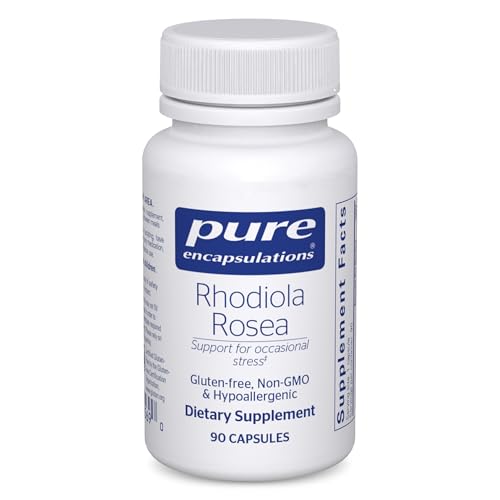
The evidence base for Rhodiola rosea’s drug interactions, particularly in humans, is still developing. Laboratory testing of the isolated constituent salidroside found no drug-interaction risk at the plasma concentrations a normal dose would produce [3], but a whole-root extract is not the same thing as one purified constituent: the human trial did find reduced CYP2C9 activity [1], and laboratory work on the commercial product confirmed the same CYP2C9 inhibition [2]. That makes the practical takeaway narrower and more useful than a blanket caution: if you take a CYP2C9 substrate with a narrow therapeutic index — warfarin and phenytoin are the two the trial authors singled out — raise rhodiola with your prescriber before you start it, not after.
It is always prudent to approach the combination of supplements and medications with care. Maintaining an open dialogue with your doctor, pharmacist, or other qualified healthcare provider is the most reliable way to navigate these considerations safely and effectively.

Importance of Professional Guidance
Given the potential for interactions, even if the evidence is still emerging or mixed, professional guidance is invaluable. Your healthcare provider can assess your individual health profile, current medications, and any specific concerns you may have. They can also help you weigh the potential benefits and risks of adding Rhodiola rosea to your regimen.

When discussing Rhodiola rosea with your healthcare provider, be sure to provide a complete list of all prescription medications, over-the-counter drugs, other supplements, and herbal products you are currently taking. This comprehensive approach allows for the most informed assessment of potential interactions and helps ensure your safety and well-being.
References
- Effect of commercial Rhodiola rosea on CYP enzyme activity in humans. European journal of clinical pharmacology, 2016
- Noncompetitive inhibition of human CYP2C9 in vitro by a commercial Rhodiola rosea product. Pharmacology research & perspectives, 2017
- In Vitro Evaluation of the Potential for Drug Interactions by Salidroside. Nutrients, 2023
- Unwanted effects of psychotropic drug interactions with medicinal products and diet supplements containing plant extracts. Psychiatria polska, 2018
- Herbal medicine–sets the heart racing!. Irish medical journal, 2010
These statements have not been evaluated by the Food and Drug Administration. This information is not intended to diagnose, treat, cure, or prevent any disease. Content is for informational purposes only and is not medical advice; consult a qualified healthcare provider before starting any supplement. As an Amazon Associate we earn from qualifying purchases.
