Ready to buy? Check current prices on Amazon and compare deals before you decide.
Navigating perimenopause often brings a range of changes, and for many women, sleep disturbances can be a significant concern. From difficulty falling asleep to waking frequently, these shifts in sleep patterns can impact daily well-being and energy levels. Many women seek natural approaches to support their sleep during this transitional phase.
Rhodiola rosea is an adaptogenic herb that has garnered interest for its potential role in supporting the body’s response to stress. Given that stress and hormonal fluctuations can both influence sleep, it’s natural to wonder if rhodiola might offer some benefit for sleep quality during perimenopause. This article explores the current understanding of rhodiola’s potential in this area, emphasizing that the evidence is limited.
Understanding Sleep Challenges in Perimenopause
Perimenopause, the transition leading up to menopause, is characterized by fluctuating hormone levels, particularly estrogen and progesterone. These hormonal shifts can contribute to various symptoms, including hot flashes, night sweats, mood changes, and anxiety, all of which can interfere with sleep. Sleep disturbances during this time are common and can range from insomnia-like symptoms to restless sleep.
Beyond hormonal fluctuations, midlife often brings increased life stressors, such as career demands, family responsibilities, and caring for aging parents. The cumulative effect of these stressors can further disrupt the body’s natural sleep-wake cycle, making restful sleep more elusive. Addressing these multifaceted factors is key to improving sleep quality during perimenopause.

What is Rhodiola Rosea?
Rhodiola rosea is a perennial flowering plant belonging to the Crassulaceae family, traditionally used in various Eastern European and Asian systems of medicine. It is often referred to as an ‘adaptogen,’ a term used to describe substances that may help the body adapt to physical, chemical, and environmental stress. The active compounds in rhodiola, such as rosavins and salidrosides, are believed to contribute to its potential effects.
As an adaptogen, rhodiola is thought to work by influencing the body’s stress response systems, including the hypothalamic-pituitary-adrenal (HPA) axis. By potentially modulating these systems, rhodiola may help the body maintain balance and resilience when faced with various stressors. This broad adaptogenic activity is what leads some to consider its potential for conditions impacted by stress, including sleep challenges.

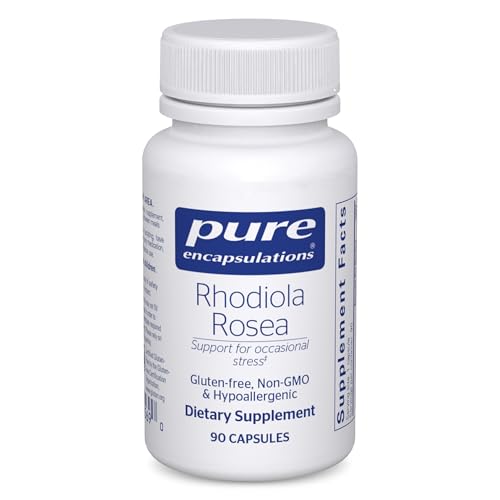
Rhodiola Rosea and Sleep: What the Evidence Says for Perimenopause
When specifically looking at rhodiola rosea’s ability to improve sleep quality during perimenopause, one thing should be said before anything else: a search of the published medical literature for rhodiola together with perimenopause returns no studies at all. Not a small trial, not a weak trial — none. Any claim you encounter about this herb and perimenopausal sleep specifically is therefore an extrapolation from other populations, and it is worth knowing that before you spend money on it.
That is narrower than saying rhodiola has never been studied for sleep, which would not be true. A 2024 study gave 750 mg of a rhodiola-and-lotus (Nelumbo nucifera) combination at bedtime for two weeks to adults with subthreshold insomnia and reported improved insomnia and sleep-quality scores along with a 57% reduction in time spent awake after falling asleep[1]. The design limits how far that travels: it was open-label and single-arm — no placebo group and no randomisation — 20 people enrolled and only 13 finished, and the product was a two-herb combination rather than rhodiola on its own, so the result cannot be attributed to rhodiola. Separately, a randomised trial in 24 young men living at 5,380 metres measured sleep architecture directly and found rhodiola shortened total waking time and raised sleep efficiency[2] — a real human finding, in a group about as far from a woman in perimenopause as a study population can get. Laboratory work has also identified sedative and hypnotic activity in rhodiola saponins, but that is animal and cell research and does not establish a clinical effect in people[3].

Most of the research on rhodiola focuses on its potential to support the body’s response to stress, reduce fatigue, and improve mental performance under stressful conditions. While these effects could indirectly influence sleep by reducing underlying stress, this is an inference rather than a direct finding about sleep itself, particularly in the context of perimenopause. It is also worth being honest about how strong that fatigue research is, because it is the foundation the whole indirect argument rests on: the systematic review of rhodiola for physical and mental fatigue found the results contradictory — two of six physical-fatigue trials and three of five mental-fatigue trials were positive — and judged every single included study to carry a high or unclear risk of bias[4]. So the honest summary is not that rhodiola has been shown to help perimenopausal sleep, and not that it has been shown to do nothing. It is that the question has not been asked yet, and the neighbouring evidence being extrapolated from is itself unsettled.
Indirect Considerations for Rhodiola and Sleep
While direct evidence is lacking for rhodiola sleep perimenopause, it is sometimes considered that by potentially supporting the body’s stress response, rhodiola might indirectly contribute to a better environment for sleep. For instance, if stress or anxiety is a primary factor disrupting sleep, and rhodiola helps in managing that stress, it could theoretically lead to an improvement in sleep quality. However, this is a theoretical link and not a proven outcome.

The closest thing to relevant human evidence comes from menopause rather than perimenopause, and it needs reading carefully. A randomised, double-blind, placebo-controlled trial in 220 women found that black cohosh combined with rhodiola relieved menopausal symptoms better than black cohosh alone or placebo over 12 weeks, with the advantage concentrated in the emotional and general-health domains[5]. Note what that is and is not: sleep was not among the reported outcomes, the effect belongs to a two-herb combination, and menopause is not perimenopause. It is a reason to think the question is worth studying, not an answer to it.
One practical caution applies whichever way you decide. When researchers analysed rhodiola supplements sold in the United States, the measured rosavin content ranged from 0.01% to 3.08% and salidroside from 0.07% to 2.91%, with substantial departures from the amounts printed on the label; one product appeared to contain undisclosed synthetic salidroside, and every capsule product tested carried trace arsenic, cobalt and lead, two of them at notably elevated levels[6]. A percentage on a bottle is a claim, not a measurement, so third-party testing and a published certificate of analysis matter more here than the standardisation figure on the front label.
It’s also worth noting that individual responses to adaptogens can vary significantly. What might be helpful for one person experiencing stress-related sleep disturbances may not have the same effect on another, especially when hormonal fluctuations of perimenopause are involved. The complexity of perimenopausal sleep challenges means that a single approach is unlikely to be a universal solution, and a holistic strategy is often most effective.
Holistic Approaches to Support Sleep During Perimenopause
Given the limited evidence for rhodiola sleep perimenopause, focusing on established strategies for improving sleep during this life stage is a sensible approach. These include maintaining a consistent sleep schedule, even on weekends, to help regulate your body’s natural circadian rhythm. Creating a relaxing bedtime routine can also signal to your body that it’s time to wind down. This might involve a warm bath, reading a book, or gentle stretching.
Optimizing your sleep environment is another crucial step. Ensure your bedroom is dark, quiet, and cool. Limiting exposure to screens (phones, tablets, computers) at least an hour before bed can also be beneficial, as the blue light emitted can interfere with melatonin production. Additionally, managing diet and exercise can play a significant role. Regular physical activity during the day, avoiding heavy meals close to bedtime, and limiting caffeine and alcohol intake, especially in the afternoon and evening, can all contribute to better sleep quality.
Addressing perimenopausal symptoms that directly impact sleep, such as hot flashes and night sweats, is also important. Strategies like wearing breathable sleepwear, keeping the bedroom cool, and discussing options with a healthcare provider can help mitigate these disruptions. For those experiencing significant sleep disturbances, consulting with a doctor or a sleep specialist is recommended to explore potential underlying causes and develop a personalized plan.

References
- Mixture of Rhodiola rosea and Nelumbo nucifera Extracts Ameliorates Sleep Quality of Adults with Sleep Disturbance. Nutrients, 2024
- The effect of rhodiola and acetazolamide on the sleep architecture and blood oxygen saturation in men living at high altitude. Zhonghua Jie He He Hu Xi Za Zhi, 2002
- Targets and underlying mechanisms related to the sedative and hypnotic activities of saponins from Rhodiola rosea L. (crassulaceae). Food & Function, 2021
- Rhodiola rosea for physical and mental fatigue: a systematic review. BMC Complementary and Alternative Medicine, 2012
- Actaea racemosa L. Is More Effective in Combination with Rhodiola rosea L. for Relief of Menopausal Symptoms: A Randomized, Double-Blind, Placebo-Controlled Study. Pharmaceuticals, 2020
- The quality and safety of Rhodiola rosea supplements on the U.S. market: An analysis of biomarkers, heavy metals, and pesticide residues. PLoS One, 2026
These statements have not been evaluated by the Food and Drug Administration. This information is not intended to diagnose, treat, cure, or prevent any disease. Content is for informational purposes only and is not medical advice; consult a qualified healthcare provider before starting any supplement. As an Amazon Associate we earn from qualifying purchases.
