Navigating perimenopause often involves exploring various approaches to support well-being. For some, this may include considering botanical supplements like Rhodiola rosea. However, for women who are also managing thyroid health with medication, understanding potential interactions is a crucial step.
This article aims to provide an evidence-based overview of what is currently known about Rhodiola rosea when used alongside thyroid medications. Our focus is on providing clear, non-hyped information to help you make informed decisions in consultation with your healthcare provider.
Understanding Rhodiola Rosea and Its Traditional Uses
Rhodiola rosea, also known as ‘golden root,’ is an adaptogenic herb that has been traditionally used to help the body adapt to various stressors. Its historical use spans centuries in different cultures, often valued for its potential to support energy levels and mental function.
As an adaptogen, Rhodiola rosea is thought to help balance the body’s response to stress, rather than directly stimulating or suppressing a particular system. This characteristic is often appealing to individuals seeking support for the various changes experienced during perimenopause.

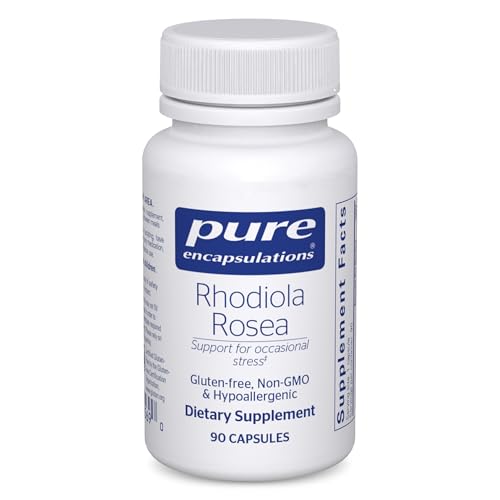
Thyroid Function and Perimenopause
The thyroid gland plays a vital role in regulating metabolism, energy, and mood. Thyroid hormone levels can fluctuate or become imbalanced, and conditions like hypothyroidism (underactive thyroid) are relatively common, particularly among women. Many women in perimenopause use thyroid medications, such as levothyroxine, to manage these conditions.

Symptoms of thyroid imbalance can sometimes overlap with those of perimenopause, making careful monitoring and diagnosis by a healthcare professional essential. Maintaining stable thyroid hormone levels through prescribed medication is important for overall health and well-being.
Rhodiola Rosea and Thyroid Medication: What the Evidence Suggests
When considering Rhodiola rosea alongside thyroid medication, it’s important to look at the available research. The evidence specifically on interactions between Rhodiola rosea and thyroid medications in humans is limited. No published study has tested Rhodiola rosea alongside levothyroxine or another thyroid hormone replacement, so there is no direct interaction data to report.
Some research has explored the effects of adaptogens, including Rhodiola rosea, on the endocrine system. For instance, studies in rats have investigated the state of the endocrine system under stress and the influence of adaptogenic biomods [1]. Another older study explored the effect of various biologically active substances and hormonal preparations on pathogenetic mechanisms [2]. However, these studies do not directly address interactions with human thyroid medications.
It is crucial to note that while other adaptogens like Ashwagandha have been studied for their safety and potential effects on thyroid function, these findings cannot be directly extrapolated to Rhodiola rosea. For example, some research has explored the safety of Ashwagandha root extract in healthy volunteers [3] and its clinical effectiveness in human ailments [4]. Additionally, there is a review exploring the role of Ayurveda-based herbal medicines in alleviating hypothyroidism and its neuropsychiatric manifestations [5]. However, these studies do not provide specific information about Rhodiola rosea’s interactions with thyroid medications.

What has actually been measured in humans is Rhodiola rosea’s effect on drug-metabolising enzymes, not on thyroid medication. In a randomized cross-over study, 13 healthy volunteers took a probe-drug cocktail with and without 14 days of pretreatment with a commercial R. rosea product: CYP2C9 activity fell by about 21% (p = 0.023), while CYP1A2, CYP2C19, CYP2D6 and CYP3A4 showed no significant change [6]. No thyroid medication was among the probe drugs, so this does not tell you what happens with levothyroxine, but it does show that rhodiola can measurably alter human drug metabolism, which we cover separately in our guide to rhodiola and drug metabolism.
Two studies do touch thyroid function directly, and both come with limits worth stating plainly. A salidroside-containing extract of Rhodiola semenovii, a related species rather than R. rosea, significantly reduced thyroid-stimulating hormone and raised thyroid hormone levels in a mercazolyl-induced hypothyroidism model [7]. That is an animal model using a different species’ extract, so it cannot be read as a human effect; it is, however, the clearest reason why monitoring TSH is a real precaution rather than a formality. Separately, researchers have proposed R. rosea for the physical and mental symptoms of the short-term hypothyroidism induced by hormone withdrawal during thyroid-cancer surveillance [8], a proposal for future study rather than a completed trial.
Due to the limited direct evidence, individuals using thyroid medication should approach the use of Rhodiola rosea with caution and under the guidance of a healthcare professional. Monitoring thyroid hormone levels closely is advisable if you choose to incorporate Rhodiola rosea.

Potential Considerations for Perimenopausal Women
Perimenopause is a time of significant hormonal shifts, which can sometimes impact thyroid function or mimic thyroid-related symptoms. Introducing any new supplement, particularly an adaptogen, while on thyroid medication, warrants careful consideration.
While Rhodiola rosea is generally considered to have a good safety profile, the lack of specific interaction studies means that potential effects on thyroid medication absorption, metabolism, or efficacy are not well understood. It’s always prudent to discuss any supplements with your doctor, who can assess your individual health profile and medication regimen.
Your healthcare provider can help you weigh the potential benefits against the unknown risks and advise on appropriate monitoring of your thyroid function if you decide to use Rhodiola rosea. This collaborative approach ensures that your thyroid health remains well-managed.
References
- [State of the endocrine system in rats of various ages under immobilization stress and influence of adaptogenic biomos]. Fiziologicheskii zhurnal, 1993
- [Effect of various biologically active substances and hormonal preparations on the pathogenetic mechanisms of manic-depressive psychoses]. Zhurnal nevropatologii i psikhiatrii imeni S.S. Korsakova (Moscow, Russia : 1952), 1988
- Safety of Ashwagandha Root Extract: A Randomized, Placebo-Controlled, study in Healthy Volunteers. Complementary therapies in medicine, 2021
- Safety and clinical effectiveness of Withania Somnifera (Linn.) Dunal root in human ailments. Journal of ethnopharmacology, 2020
- Alternative and Complementary Therapies: A Review Exploring the Role of Yoga and Ayurveda-based Herbal Medicines in Alleviating Hypothyroidism and Its Neuropsychiatric Manifestations. Annals of neurosciences, 2026
- Effect of commercial Rhodiola rosea on CYP enzyme activity in humans. European journal of clinical pharmacology, 2016
- Antihypothyroid Effect of Salidroside. Molecules (Basel, Switzerland), 2022
- Exploring new applications for Rhodiola rosea: can we improve the quality of life of patients with short-term hypothyroidism induced by hormone withdrawal?. Journal of medicinal food, 2010
These statements have not been evaluated by the Food and Drug Administration. This information is not intended to diagnose, treat, cure, or prevent any disease. Content is for informational purposes only and is not medical advice; consult a qualified healthcare provider before starting any supplement. As an Amazon Associate we earn from qualifying purchases.
