Ready to buy? Check current prices on Amazon and compare deals before you decide.
Perimenopause, the transitional phase leading up to menopause, often brings a variety of changes, and for many women, persistent fatigue can be a prominent concern. This type of fatigue can impact daily life, energy levels, and overall well-being. Understanding potential ways to support the body during this time is a common focus.
Rhodiola rosea, an adaptogenic herb, has garnered interest for its traditional use in supporting energy and stamina. This article will explore the current scientific understanding of rhodiola rosea’s role in addressing fatigue specifically within the context of perimenopause, based on available research.
Understanding Perimenopausal Fatigue
Perimenopausal fatigue is a complex experience that can stem from various factors unique to this life stage. Hormonal fluctuations, particularly in estrogen and progesterone, are central to perimenopausal changes and can influence sleep patterns, mood, and energy regulation. These shifts can contribute to feelings of tiredness that differ from ordinary fatigue.
Beyond hormonal changes, other elements can exacerbate fatigue during perimenopause. These may include sleep disturbances like hot flashes and night sweats, increased stress levels, and changes in metabolism. Addressing fatigue during this period often involves a multi-faceted approach, including lifestyle adjustments and sometimes, the exploration of supportive supplements.

What is Rhodiola Rosea?
Rhodiola rosea, often referred to as ‘golden root,’ is a perennial plant found in cold, high-altitude regions of Europe and Asia. It has a long history of traditional use in various cultures to help individuals adapt to physical and environmental stressors. As an adaptogen, it is believed to help the body maintain balance and resilience when faced with different forms of stress.
The primary bioactive compounds in Rhodiola rosea are thought to be rosavins and salidrosides. These compounds are often standardized in rhodiola supplements. The proposed mechanisms of action for rhodiola involve its potential influence on neurotransmitter levels, energy metabolism, and the body’s stress response systems.
Rhodiola Rosea and Fatigue: A General Overview of Research
Research into rhodiola rosea’s effects on fatigue has explored various populations and types of fatigue, including stress-induced fatigue and general feelings of tiredness. Studies have investigated its potential to improve mental and physical performance under stressful conditions and to reduce perceptions of fatigue. The two most-cited are a double-blind cross-over trial in 56 healthy physicians working night duty, which found a significant improvement in a composite fatigue index during the first two weeks[1], and a placebo-controlled trial in 60 adults with diagnosed stress-related fatigue[2]. Note the populations: night-shift doctors and adults with a fatigue-syndrome diagnosis, not women in perimenopause.
While some research suggests rhodiola may offer support for managing fatigue, it’s important to note that the body of evidence is still developing. Many studies have been relatively small, and findings can sometimes be mixed depending on the specific formulation, dosage, and study population. The systematic review of this exact question is blunter than a summary grade would suggest: it concluded that the research on rhodiola for physical and mental fatigue is contradictory, with only 2 of 6 physical-fatigue trials and 3 of 5 mental-fatigue trials reporting a benefit, and it rated every single included study at high or unclear risk of bias[3]. Its authors call for a rigorously designed trial before efficacy can be treated as established.

Rhodiola Rosea and Perimenopausal Fatigue: Specific Considerations
While there is general research on rhodiola and fatigue, specific studies directly investigating rhodiola rosea’s impact on fatigue experienced during perimenopause are limited. Much of the current understanding relies on extrapolations from studies on general fatigue, stress, and mood, which can be relevant given the interconnectedness of these symptoms during perimenopause.
The unique hormonal landscape of perimenopause means that fatigue in this stage may have distinct underlying causes compared to other forms of fatigue. Therefore, while rhodiola’s adaptogenic properties might theoretically offer support for the body’s stress response and energy levels, more targeted research is needed to fully understand its specific benefits for perimenopausal fatigue. Women navigating perimenopause often experience a combination of symptoms, and rhodiola’s potential influence on stress and mood could indirectly support energy levels, even if direct evidence for perimenopausal fatigue is less robust.
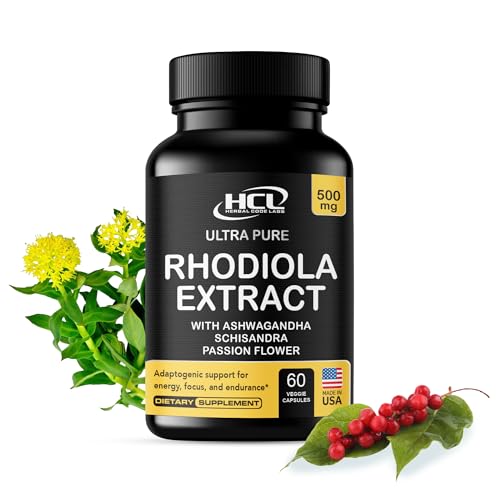
It is important for individuals considering rhodiola for perimenopausal fatigue to approach it with realistic expectations and to recognize that research specifically targeting this demographic is not as extensive as for general fatigue.
Dosage and Safety Considerations for Rhodiola Rosea
Typical dosages of rhodiola rosea used in research often range from 200 mg to 600 mg per day, with standardized extracts containing 2-3% rosavins and 1-2% salidrosides. However, the optimal dosage can vary depending on the individual, the specific product, and the desired outcome. It is always advisable to follow product label instructions or guidance from a qualified healthcare professional.
Rhodiola rosea is generally considered well-tolerated by most individuals when used appropriately. However, some people may experience mild side effects such as dizziness, dry mouth, or difficulty sleeping if taken too close to bedtime. Due to its potential stimulating effects, it is often recommended to take rhodiola earlier in the day.
The best-characterised interaction is with drugs cleared by the liver enzyme CYP2C9. In a randomized cross-over study, 13 healthy volunteers took a commercial R. rosea product for 14 days; CYP2C9 activity fell by about 21%, while CYP1A2, CYP2C19, CYP2D6 and CYP3A4 showed no significant change. The authors flag narrow-therapeutic-index CYP2C9 substrates by name, specifically warfarin and phenytoin[4]. Caution is also commonly advised alongside antidepressants that act on serotonin. Claims that rhodiola interacts with diabetes or blood-pressure medications are widely repeated but are not established by comparable human evidence, so treat them as unconfirmed rather than as settled. Individuals taking any prescription medications or those with underlying health conditions should consult with a healthcare provider before starting rhodiola rosea or any new supplement, especially during perimenopause when the body is undergoing significant changes.

References
- Rhodiola rosea in stress induced fatigue – a double blind cross-over study of a standardized extract SHR-5 with a repeated low-dose regimen on the mental performance of healthy physicians during night duty. Phytomedicine, 2000
- A randomised, double-blind, placebo-controlled, parallel-group study of the standardised extract SHR-5 of the roots of Rhodiola rosea in the treatment of subjects with stress-related fatigue. Planta medica, 2009
- Rhodiola rosea for physical and mental fatigue: a systematic review. BMC complementary and alternative medicine, 2012
- Effect of commercial Rhodiola rosea on CYP enzyme activity in humans. European journal of clinical pharmacology, 2016
These statements have not been evaluated by the Food and Drug Administration. This information is not intended to diagnose, treat, cure, or prevent any disease. Content is for informational purposes only and is not medical advice; consult a qualified healthcare provider before starting any supplement. As an Amazon Associate we earn from qualifying purchases.
