Navigating perimenopause can bring about a range of changes, and for many women, ‘brain fog’ and shifts in cognitive function are common experiences. This can manifest as difficulty concentrating, memory lapses, or a general feeling of mental sluggishness. Understanding potential ways to support cognitive well-being during this time is a frequent area of interest.
Rhodiola rosea is an adaptogenic herb that has garnered attention for its potential effects on various aspects of health. This article will explore the current understanding and available evidence regarding Rhodiola rosea’s potential in supporting cognitive function and addressing brain fog specifically in the context of perimenopause.
Understanding Brain Fog in Perimenopause
Brain fog is not a medical condition in itself, but rather a descriptive term for a collection of symptoms that can affect mental clarity and cognitive performance. During perimenopause, hormonal fluctuations, particularly in estrogen, are thought to play a role in these experiences. Estrogen has a wide range of functions in the body, including effects on brain health and neurotransmitter activity.
The subjective experience of brain fog can be frustrating and impact daily life, making tasks that once felt routine seem more challenging. While it is a common complaint, finding strategies to support mental sharpness during this transitional phase is a priority for many women. This often involves a multi-faceted approach, which may include lifestyle adjustments and exploring certain supplements.
What is Rhodiola Rosea?
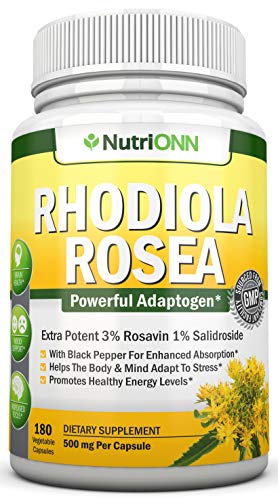
Rhodiola rosea is a perennial flowering plant belonging to the Crassulaceae family, traditionally used in Eastern European and Asian traditional medicine. It is often referred to as an ‘adaptogen,’ a classification for herbs believed to help the body adapt to various stressors and promote balance.

The active compounds in Rhodiola rosea, such as rosavins and salidrosides, are thought to contribute to its potential effects. These compounds are believed to influence various physiological processes, including those related to stress response and energy metabolism. Its adaptogenic properties are what often lead individuals to consider it for supporting overall well-being during periods of change or challenge, such as perimenopause.
Rhodiola Rosea and Cognitive Function: What the Evidence Suggests
Research into Rhodiola rosea has explored its potential effects on cognitive function in various populations. One study investigated the efficacy and tolerability of a Rhodiola rosea extract in adults experiencing physical and cognitive deficiencies. The findings suggested that the extract was associated with improvements in cognitive function [1]. This general finding might offer some insight into its potential role in contexts like perimenopause, where cognitive changes are reported.
While the study mentioned above did not specifically focus on perimenopausal women, the observations regarding cognitive support in adults experiencing deficiencies are relevant to the discussion around brain fog. Cognitive deficiencies can encompass various symptoms, including those often described as brain fog, such as difficulties with concentration and mental fatigue. The adaptogenic nature of Rhodiola rosea is often hypothesized to contribute to these effects by helping the body manage stress and maintain physiological balance, which can indirectly support cognitive processes.

Rhodiola Rosea and Perimenopause: A Closer Look
The connection between Rhodiola rosea and perimenopause extends beyond general cognitive support. One area of interest is its potential interaction with hormonal systems. Some research suggests that Rhodiola rosea may act as a natural selective estrogen receptor modulator (SERM) [2]. This means it might interact with estrogen receptors in the body, potentially influencing pathways that are relevant during perimenopause.
The fluctuating estrogen levels during perimenopause are thought to contribute to various symptoms, including cognitive changes. If Rhodiola rosea indeed has SERM-like properties, it could theoretically offer a unique mechanism through which it might support women during this transition [2]. However, it is important to note that more specific research is needed to fully understand the implications of this potential interaction in the context of perimenopausal brain fog and cognitive function. The evidence for this specific application is still developing.

Considering Rhodiola Rosea for Perimenopausal Brain Fog
Given the available evidence, Rhodiola rosea shows moderate potential for supporting cognitive function and potentially addressing brain fog during perimenopause. Its adaptogenic properties and the suggestion of its influence on cognitive abilities [1], combined with its potential interaction with estrogen receptors [2], make it an herb of interest for women navigating this life stage.
It’s important to approach supplementation with a balanced perspective. While some studies show promising results, individual responses can vary. The overall strength of evidence specifically for rhodiola brain fog perimenopause is moderate, suggesting that while there are encouraging signs, more targeted research focusing on perimenopausal women would be beneficial to draw stronger conclusions.
When considering Rhodiola rosea, factors such as the specific extract used, dosage, and duration of use can influence outcomes. It is generally recommended to start with a lower dose and observe how your body responds.

References
- Efficacy and tolerability of a Rhodiola rosea extract in adults with physical and cognitive deficiencies. Advances in therapy, 2007
- Pause menopause with Rhodiola rosea, a natural selective estrogen receptor modulator. Phytomedicine : international journal of phytotherapy and phytopharmacology, 2016
These statements have not been evaluated by the Food and Drug Administration. This information is not intended to diagnose, treat, cure, or prevent any disease. Content is for informational purposes only and is not medical advice; consult a qualified healthcare provider before starting any supplement. As an Amazon Associate we earn from qualifying purchases.
