Navigating perimenopause can bring a range of changes, and for many women, managing anxiety becomes a significant focus during this time. As interest in natural approaches grows, understanding the evidence behind options like Rhodiola rosea is increasingly important.
This article explores the current research regarding Rhodiola rosea’s potential role in supporting individuals experiencing anxiety, particularly within the context of perimenopause. We’ll examine the findings from clinical studies and discuss what the evidence suggests about its efficacy and safety profile.
Understanding Perimenopausal Anxiety
Perimenopause is a transitional phase leading up to menopause, often characterized by fluctuating hormone levels. These hormonal shifts, particularly in estrogen and progesterone, are thought to contribute to various symptoms, including mood changes and increased experiences of anxiety. While anxiety can be a normal human experience, when it becomes persistent or significantly impacts daily life, individuals often seek ways to manage it effectively.
For many women, the search for supportive strategies includes exploring botanical options. This interest often stems from a desire for approaches that may complement conventional care or offer an alternative for those seeking different avenues of support during this life stage.
Rhodiola Rosea: An Adaptogenic Herb
Rhodiola rosea is a plant that has been traditionally used in various cultures, particularly in Eastern Europe and Asia, for its purported adaptogenic properties. Adaptogens are substances believed to help the body adapt to stress and maintain balance. The active compounds in Rhodiola rosea, such as rosavins and salidroside, are thought to contribute to its observed effects.
The concept of adaptogens suggests that these substances may help normalize physiological functions and enhance the body’s resilience to stressors, whether physical, chemical, or biological. This mechanism of action is what has drawn researchers to investigate Rhodiola rosea’s potential in managing conditions like anxiety.

Evidence for Rhodiola Rosea in Anxiety Management
Research has explored Rhodiola rosea’s potential to support individuals experiencing anxiety. A pilot study investigated the use of Rhodiola rosea (Rhodax) in individuals with generalized anxiety disorder (GAD) [1]. This study provides initial insights into its possible utility in managing anxiety symptoms.
Further reviews of plant-based medicines for anxiety disorders have also included Rhodiola rosea in their examination of clinical studies and supporting preclinical evidence [2]. These reviews help to consolidate the existing body of research and provide a broader perspective on its potential role.
More recent guidelines, such as those from the World Federation of Societies of Biological Psychiatry (WFSBP) and Canadian Network for Mood and Anxiety Treatments (CANMAT) Taskforce, have also reviewed Rhodiola rosea in their clinician guidelines for the treatment of psychiatric disorders with nutraceuticals and phytoceuticals, and did not support its use for mood disorders [3]. Its appearance in the guidelines reflects interest in the herb, not an endorsement for mood disorders.

Specific Findings on Efficacy
In the pilot study involving individuals with generalized anxiety disorder, participants receiving Rhodiola rosea showed a reduction in anxiety symptoms [1]. This finding suggests that Rhodiola rosea may offer support for those experiencing anxiety, although further large-scale studies are typically needed to confirm these initial observations.
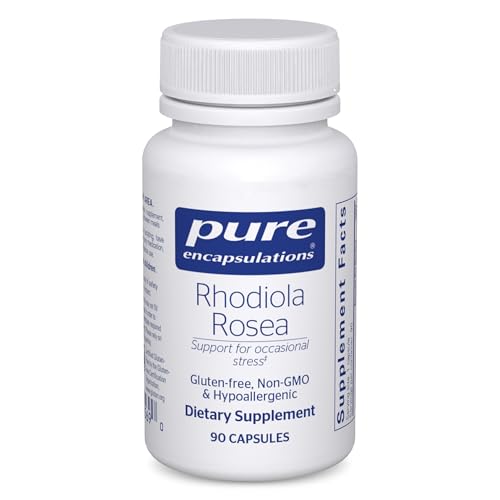
The review of plant-based medicines highlighted Rhodiola rosea as one of the botanicals with clinical studies supporting its use for anxiety disorders [2]. This indicates some early evidence, which the more recent guidelines did not carry forward into support for mood disorders.
The WFSBP and CANMAT Taskforce guidelines, which provide recommendations for clinicians, did not support Rhodiola rosea for use in mood disorders and did not list it among the herbs modestly supported for anxiety disorders [3]. This does not amount to an endorsement, since the guidelines did not support rhodiola for mood disorders.
Rhodiola Rosea and Perimenopause: An Indirect Connection
While direct studies specifically on Rhodiola rosea for anxiety during perimenopause are less common, the general evidence for its potential in managing anxiety symptoms [1][2][3] is early, and current guidelines do not support rhodiola for mood disorders, so it is a question to raise with a clinician for women in this life stage. The anxiety experienced during perimenopause often shares characteristics with general anxiety, making the broader research on Rhodiola rosea potentially applicable.
The adaptogenic properties of Rhodiola rosea, which aim to help the body cope with various stressors, could theoretically offer support during a time when hormonal fluctuations and associated symptoms can increase overall stress levels. However, it’s important to recognize that individual responses can vary, and what works for one person may not work for another.


References
- A pilot study of Rhodiola rosea (Rhodax) for generalized anxiety disorder (GAD). Journal of alternative and complementary medicine (New York, N.Y.), 2008
- Plant-based medicines for anxiety disorders, part 2: a review of clinical studies with supporting preclinical evidence. CNS drugs, 2013
- Clinician guidelines for the treatment of psychiatric disorders with nutraceuticals and phytoceuticals: The World Federation of Societies of Biological Psychiatry (WFSBP) and Canadian Network for Mood and Anxiety Treatments (CANMAT) Taskforce. The world journal of biological psychiatry : the official journal of the World Federation of Societies of Biological Psychiatry, 2022
These statements have not been evaluated by the Food and Drug Administration. This information is not intended to diagnose, treat, cure, or prevent any disease. Content is for informational purposes only and is not medical advice; consult a qualified healthcare provider before starting any supplement. As an Amazon Associate we earn from qualifying purchases.
