Ready to buy? Check current prices on Amazon and compare deals before you decide.
Perimenopause is a significant transitional phase in a woman’s life, often accompanied by a range of symptoms, including fluctuating moods. Many women seek non-pharmacological approaches to support their well-being during this time.
Among the various botanicals considered, Rhodiola rosea has gained attention for its potential adaptogenic properties. This article explores the current understanding of whether Rhodiola rosea may offer support for mood swings experienced during perimenopause.
Understanding Perimenopausal Mood Swings
Perimenopause marks the period leading up to menopause, characterized by hormonal fluctuations, primarily in estrogen and progesterone. These shifts can impact various bodily systems, including those that regulate mood.
Mood swings during perimenopause can manifest as increased irritability, anxiety, sadness, or a general feeling of emotional volatility. These experiences are common and can significantly affect daily life and overall quality of life for many women.
While hormonal changes are a primary driver, other factors like sleep disturbances, stress, and lifestyle choices can also contribute to the intensity and frequency of mood fluctuations during this stage of life.

What is Rhodiola Rosea?
Rhodiola rosea, also known as ‘golden root,’ is an adaptogenic herb that grows in cold, high-altitude regions of Europe and Asia. Adaptogens are a class of botanicals believed to help the body adapt to various stressors, promoting balance and resilience.
Historically, Rhodiola rosea has been used in traditional medicine practices to support physical and mental endurance and to help cope with stress. Its primary active compounds, salidroside and rosavins, are thought to contribute to its potential effects.
The concept of an adaptogen suggests that it may help normalize bodily functions that have been disrupted by stress, rather than directly stimulating or suppressing them. This mechanism is why Rhodiola rosea is often explored for conditions where stress and fatigue play a role.
Rhodiola Rosea and Mood: What the Evidence Suggests
Research into Rhodiola rosea has explored its potential effects on mood, stress, and fatigue in various populations. While there is interest in its application during perimenopause, direct studies specifically on rhodiola mood swings perimenopause have not been published.
General research on Rhodiola rosea has looked at its impact on stress-related fatigue and symptoms of mild to moderate depression[1]. For example, some studies have indicated that Rhodiola rosea may help improve symptoms of stress-induced fatigue and enhance mental performance under stress[2][3].
It’s important to note that much of the existing research on Rhodiola rosea and mood has been conducted in populations experiencing general stress, fatigue, or mild depression, rather than specifically on perimenopausal women experiencing hormonally-driven mood swings. Therefore, applying these findings directly to the perimenopausal experience requires careful consideration.

Considering Rhodiola Rosea for Perimenopausal Mood Swings
Given the current evidence, it’s not possible to definitively state that Rhodiola rosea directly addresses perimenopausal mood swings specifically caused by hormonal fluctuations. However, if general stress and fatigue are contributing factors to mood instability during perimenopause, Rhodiola rosea might offer support in those areas.
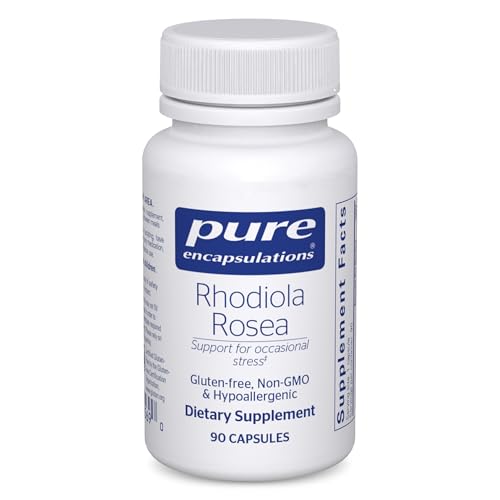
The adaptogenic properties of Rhodiola rosea suggest it could potentially help the body cope with general stressors that might exacerbate mood changes. By potentially supporting the body’s stress response, it might indirectly contribute to a sense of greater emotional balance.
Women considering Rhodiola rosea for mood support during perimenopause should approach it with realistic expectations. It is not a hormone replacement therapy, nor is it a specific intervention for perimenopausal hormonal fluctuations. Its potential role may be more related to supporting the body’s general resilience to stress, which can be a component of mood management.
Safety and Considerations for Women in Midlife
Rhodiola rosea is generally considered well-tolerated by many individuals when taken at recommended dosages. However, like any botanical, it can have potential side effects and interactions.
Possible side effects, though generally mild, can include dizziness, dry mouth, or difficulty sleeping if taken too close to bedtime. It’s advisable to start with a lower dose to assess individual tolerance.
Women in midlife often take other medications or have underlying health conditions. Rhodiola rosea has measurable interaction potential with prescription drugs. In a randomized cross-over study, 14 days of a commercial rhodiola product cut CYP2C9 activity in healthy volunteers by 21%, measured using losartan, a blood pressure medication, as the probe drug; the authors flagged that as potentially relevant for narrow-therapeutic-index CYP2C9 drugs such as warfarin[4]. Two rhodiola constituents, rhodiosin and rhodionin, also inhibit CYP2D6[5], the enzyme that clears many antidepressants. Glucose-lowering effects have so far been shown only in animal models, so an interaction with diabetes medication is theoretical rather than documented. Therefore, it is crucial to consult with a healthcare provider before starting any new supplement, especially during perimenopause.


References
- Clinical trial of Rhodiola rosea L. extract SHR-5 in the treatment of mild to moderate depression. Nord J Psychiatry, 2007
- A randomised, double-blind, placebo-controlled, parallel-group study of the standardised extract shr-5 of the roots of Rhodiola rosea in the treatment of subjects with stress-related fatigue. Planta Med, 2009
- Rosenroot (Rhodiola rosea): traditional use, chemical composition, pharmacology and clinical efficacy. Phytomedicine, 2010
- Effect of commercial Rhodiola rosea on CYP enzyme activity in humans. European Journal of Clinical Pharmacology, 2016
- Two potent cytochrome P450 2D6 inhibitors found in Rhodiola rosea. Pharmazie, 2013
These statements have not been evaluated by the Food and Drug Administration. This information is not intended to diagnose, treat, cure, or prevent any disease. Content is for informational purposes only and is not medical advice; consult a qualified healthcare provider before starting any supplement. As an Amazon Associate we earn from qualifying purchases.
