Rhodiola rosea, also known as ‘golden root,’ has a rich history of use in various traditional health practices across different cultures. Its documented applications span centuries, reflecting a long-standing appreciation for its properties. Understanding these historical uses can provide valuable context for its contemporary interest, particularly for women experiencing the shifts of midlife and menopause.
This article will explore the ancient roots of Rhodiola rosea, examining where and how it was traditionally incorporated into wellness practices. We will then discuss how these historical insights connect with modern understandings and potential applications, always with an emphasis on evidence-based information and sensible considerations for its use.
A History Rooted in Diverse Cultures
The use of Rhodiola rosea has been documented in various regions, including Siberia, Scandinavia, and parts of Asia. Its presence in traditional health practices suggests a long-held belief in its supportive qualities. The plant is sometimes referred to as ‘roseroot’ due to the rose-like scent of its fresh-cut rhizome [1].
Historical records indicate that Rhodiola rosea was valued in these cultures for its perceived ability to support the body’s resilience. For example, it has been noted in traditional Chinese medicine and in the folk medicine of Eastern Europe. Its widespread traditional use across such diverse geographical areas highlights its historical significance as a botanical resource [1].
Traditional Applications Across Eurasia
In traditional Siberian and Scandinavian practices, Rhodiola rosea was often consumed to help individuals adapt to physically demanding conditions and the harsh environments of these regions. It was considered a valuable resource for maintaining general well-being and supporting endurance [1].

Similar traditional uses have been observed in other parts of the world. For instance, ethnobotanical studies in regions like Kohistan, North Pakistan, document the use of various plants in traditional medicine, though specific details about Rhodiola rosea’s use there are not provided in the available evidence [2]. However, the broader context of traditional plant use for health is well-established across many cultures.
The plant’s adaptogenic properties, a concept that describes substances that may help the body adapt to various stressors, have been a focus of both traditional understanding and modern research. While the term ‘adaptogen‘ is a more recent scientific concept, the traditional applications of Rhodiola rosea align with this idea of supporting the body’s natural adaptive capacities [3].
Connecting Traditional Wisdom to Modern Understanding
The concept of ‘adaptogens’ emerged in the mid-20th century to describe natural substances that may help the body maintain balance and adapt to physical, chemical, or biological stressors without causing overstimulation or inhibition [3]. Rhodiola rosea is recognized as one such adaptogen, alongside other well-known botanicals like Eleutherococcus senticosus and certain types of ginseng [4][5].
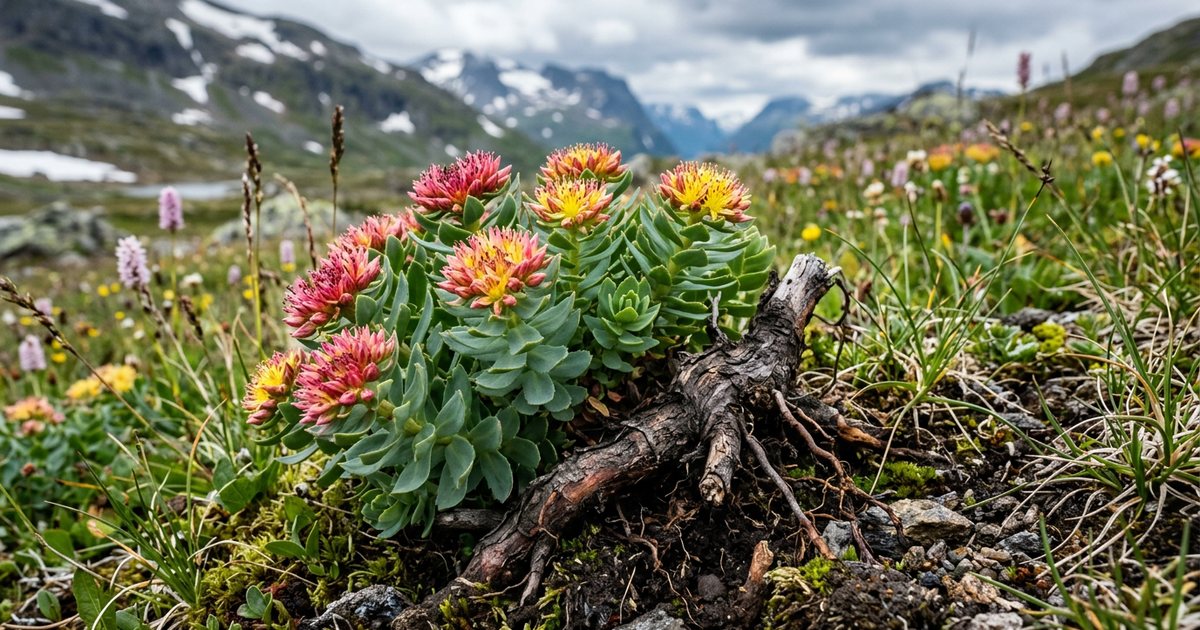
Modern scientific exploration has sought to understand the mechanisms behind the traditional observed benefits of Rhodiola rosea. Researchers are investigating the compounds within the plant, such as rosavins and salidroside, which are believed to contribute to its properties. For example, studies have looked at the effects of fertilization on phenolic compounds in related species like Rhodiola crenulata, indicating an interest in the plant’s active constituents [6].
For women navigating midlife and menopause, the concept of adaptogens like Rhodiola rosea may be of interest as they seek support for managing various physiological and psychological shifts. The traditional emphasis on resilience and adaptation resonates with the contemporary desire for holistic well-being during this life stage.

Modern Applications and Considerations for Midlife Women
While traditional uses provide a historical foundation, modern interest in Rhodiola rosea focuses on its potential to support overall well-being, particularly in the context of stress and fatigue. The adaptogenic classification suggests it may help the body respond to stressors in a balanced way, which can be relevant during periods of change such as midlife and menopause.
It is important to note that the quality and composition of Rhodiola rosea products can vary. Factors such as geographical origin and cultivation methods can influence the phytochemical profile of the plant [1][6]. This variability underscores the importance of sourcing reputable products when considering Rhodiola rosea for personal use.
As with any botanical, individual responses to Rhodiola rosea can differ. While the historical use is extensive, current scientific understanding is continually evolving. Women considering Rhodiola rosea for support during midlife and menopause should approach its use thoughtfully and with awareness of their unique health needs.

References
- Running out of time to smell the roseroots: Reviewing threats and trade in wild Rhodiola rosea L. Journal of ethnopharmacology, 2021
- Standard medical ethnobotany of Kohistan, North Pakistan. Journal of ethnobiology and ethnomedicine, 2024
- Plant Adaptogens-History and Future Perspectives. Nutrients, 2021
- Eleutherococcus senticosus (Rupr. & Maxim.) Maxim. (Araliaceae) as an adaptogen: a closer look. Journal of ethnopharmacology, 2000
- Cellular stress response mechanisms as therapeutic targets of ginsenosides. Medicinal research reviews, 2018
- [Effect of fertilization combinations of nitrogen, phosphorus, and potassium on four phenolic compounds of cultivated Rhodiola crenulata]. Zhongguo Zhong yao za zhi = Zhongguo zhongyao zazhi = China journal of Chinese materia medica, 2018
These statements have not been evaluated by the Food and Drug Administration. This information is not intended to diagnose, treat, cure, or prevent any disease. Content is for informational purposes only and is not medical advice; consult a qualified healthcare provider before starting any supplement. As an Amazon Associate we earn from qualifying purchases.
