Perimenopause is a significant life stage for women, often accompanied by a variety of changes, including shifts in mood. For some, these changes can manifest as feelings of low mood or symptoms consistent with mild depression, adding to the complexities of this transition. Navigating these emotional fluctuations can be challenging, prompting many to explore supportive strategies.
Rhodiola rosea, a botanical long used in traditional practices, has garnered interest for its potential adaptogenic properties, which may help the body adapt to stress. Research has explored its role in supporting emotional well-being and mitigating symptoms associated with stress-related conditions. This article will examine the current evidence regarding Rhodiola rosea’s potential utility for mood support and mild depression during perimenopause.
Understanding Mood Changes in Perimenopause
The perimenopausal transition is characterized by fluctuating hormone levels, particularly estrogen and progesterone. These hormonal shifts are thought to play a role in the mood changes some women experience during this time. Symptoms can range from irritability and anxiety to persistent low mood or feelings of sadness, sometimes aligning with mild depressive symptoms. While these experiences are common, they can significantly impact quality of life.
It’s important to differentiate between typical perimenopausal mood fluctuations and clinical depression. Any persistent or severe mood changes should be discussed with a healthcare provider for proper evaluation and guidance. Many women seek ways to support their emotional well-being during this period, and understanding potential complementary approaches can be helpful.
Rhodiola Rosea: An Overview of its Potential
Rhodiola rosea, also known as ‘golden root’ or ‘arctic root,’ is an adaptogen, a classification of plants believed to help the body resist various stressors. Its traditional use dates back centuries, particularly in Eastern European and Asian medicine, where it was valued for its potential to support physical and mental endurance [1].
The plant’s beneficial properties are thought to be linked to its unique phytochemicals, including rosavins and salidroside. These compounds are believed to interact with various physiological pathways, potentially influencing neurotransmitter activity and stress response systems in the body [1]. This adaptogenic effect is what makes Rhodiola rosea an area of interest for those seeking support for stress-related fatigue and mood disturbances.
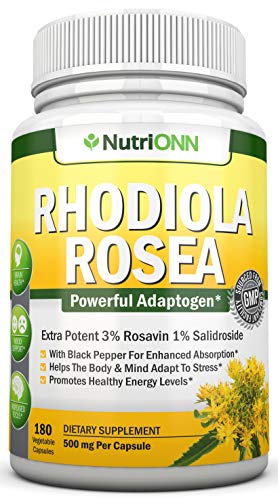
Evidence for Rhodiola Rosea and Mood Support
Several studies have investigated the effects of Rhodiola rosea on mood and stress-related symptoms. Clinical evidence suggests that Rhodiola rosea preparations may be effective in alleviating various aspects of life-stress symptoms and stress-induced conditions [2]. This includes potential benefits for symptoms of stress-related fatigue, which can often overlap with feelings of low mood [3].

Some research indicates that Rhodiola rosea may have a role in supporting mental performance and reducing mental fatigue under stressful conditions [1]. While the evidence regarding its direct impact on specific mood disorders like major depression is still developing and often from smaller studies, its potential to modulate stress responses could indirectly support mood stability for individuals experiencing mild, stress-related mood fluctuations during perimenopause.
It’s important to note that while some literature reviews mention Rhodiola rosea in the context of complementary approaches for mood disorders, specific, large-scale studies directly on perimenopausal depression are limited [4][5]. However, the broader evidence for its anti-stress and anti-fatigue properties provides a basis for its potential utility in managing general mood challenges during this life stage.
Rhodiola Rosea and Mild Depression Symptoms
For individuals experiencing mild depressive symptoms during perimenopause, Rhodiola rosea has shown some promise in certain contexts. A review of clinician guidelines for nutraceuticals and phytoceuticals in psychiatric disorders included Rhodiola rosea, which did not support rhodiola for use in mood disorders [6]. The taskforce also noted that quality and standardisation of phytoceuticals limit confidence in these agents.
The mechanism by which Rhodiola rosea might influence mild depressive symptoms is thought to involve its impact on neurotransmitters and the body’s stress response system. By helping the body adapt to stress, it may indirectly contribute to a more stable mood. Some studies have explored its effects on reducing symptoms like insomnia, emotional instability, and fatigue, which often accompany mild depression [2].

It’s crucial to emphasize that the evidence for Rhodiola rosea in managing mild depression is moderate, and it is not intended to replace conventional medical care for diagnosed depressive disorders. Its potential benefit is primarily seen in the context of mild to moderate, stress-related mood disturbances, which can be common during perimenopause. Combinations of ingredients, including Rhodiola, have also been explored for chronically stressed individuals, showing potential benefits for stress parameters [7].
Considerations for Perimenopausal Women
For women in perimenopause experiencing mood changes or mild depressive symptoms, Rhodiola rosea could be considered as a supportive option. Its adaptogenic properties may help the body cope with the physiological and psychological stressors associated with hormonal fluctuations. However, perimenopause is a complex time, and individual responses to supplements can vary.
It is important to select high-quality Rhodiola rosea products, typically standardized to contain a specific amount of rosavins and salidroside, as these are considered the primary active compounds [1]. Dosage and duration of use should be discussed with a healthcare professional to ensure appropriateness and to monitor for any potential interactions or side effects. While Rhodiola rosea is generally considered well-tolerated, individual sensitivities can occur.

Women with a history of hormone-sensitive conditions, such as certain breast cancers, should exercise caution and consult with their healthcare provider before using Rhodiola rosea. Some research has explored the interaction of Rhodiola with estrogenic pathways, though this is an area requiring further investigation [8]. Always prioritize consultation with a healthcare provider before introducing any new supplement, especially during perimenopause.


References
- Rosenroot (Rhodiola rosea): traditional use, chemical composition, pharmacology and clinical efficacy. Phytomedicine : international journal of phytotherapy and phytopharmacology, 2010
- The Effectiveness of Rhodiola rosea L. Preparations in Alleviating Various Aspects of Life-Stress Symptoms and Stress-Induced Conditions-Encouraging Clinical Evidence. Molecules (Basel, Switzerland), 2022
- A randomised, double-blind, placebo-controlled, parallel-group study of the standardised extract shr-5 of the roots of Rhodiola rosea in the treatment of subjects with stress-related fatigue. Planta medica, 2009
- Nature against depression. Current medicinal chemistry, 2012
- Mood disorders and complementary and alternative medicine: a literature review. Neuropsychiatric disease and treatment, 2013
- Clinician guidelines for the treatment of psychiatric disorders with nutraceuticals and phytoceuticals: The World Federation of Societies of Biological Psychiatry (WFSBP) and Canadian Network for Mood and Anxiety Treatments (CANMAT) Taskforce. The world journal of biological psychiatry : the official journal of the World Federation of Societies of Biological Psychiatry, 2022
- Effect of a Combination of Magnesium, B Vitamins, Rhodiola, and Green Tea (L-Theanine) on Chronically Stressed Healthy Individuals-A Randomized, Placebo-Controlled Study. Nutrients, 2022
- Rhodiola crenulata induces an early estrogenic response and reduces proliferation and tumorsphere formation over time in MCF7 breast cancer cells. Phytomedicine : international journal of phytotherapy and phytopharmacology, 2016
These statements have not been evaluated by the Food and Drug Administration. This information is not intended to diagnose, treat, cure, or prevent any disease. Content is for informational purposes only and is not medical advice; consult a qualified healthcare provider before starting any supplement. As an Amazon Associate we earn from qualifying purchases.
