Navigating midlife and menopause can bring unique challenges, and some women may explore various options to support their well-being. Rhodiola rosea is an adaptogenic herb that has gained attention for its potential to help the body adapt to stress [1].
For individuals considering rhodiola rosea, especially those also using antidepressant medications, understanding potential interactions is crucial. While research on this specific topic is limited, it’s important to be aware of the existing information to make informed decisions in consultation with a healthcare provider.
What is Rhodiola Rosea?
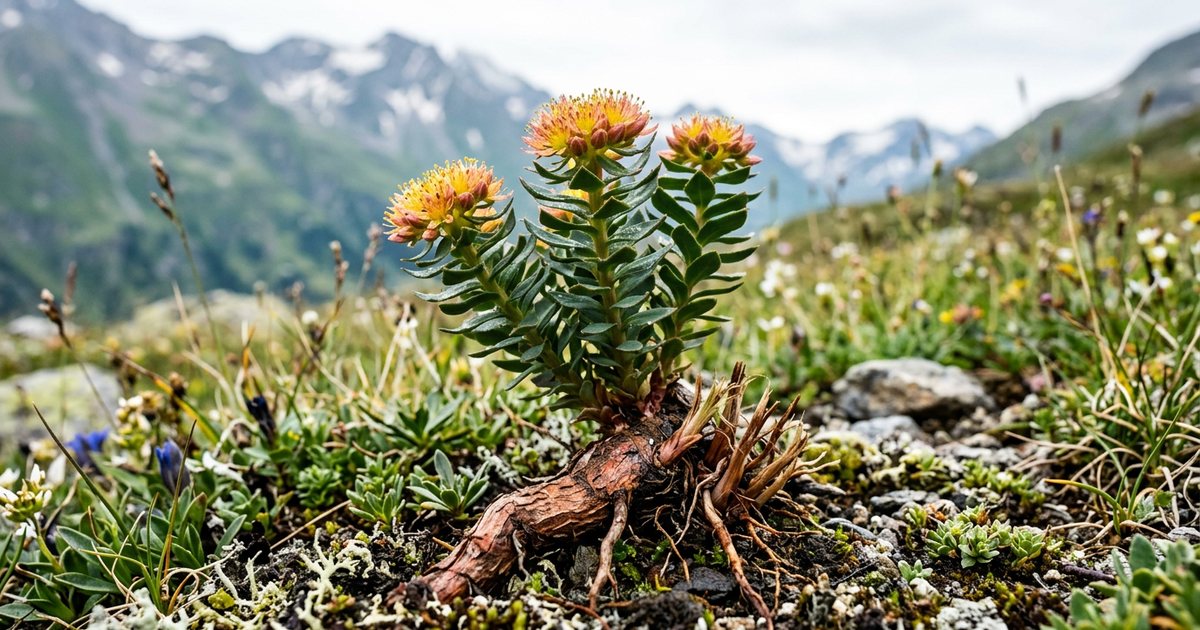
Rhodiola rosea is a perennial plant found in cold, high-altitude regions. It has been traditionally used in various cultures to support physical and mental performance and to help the body respond to stress [1]. As an adaptogen, it is thought to help normalize bodily functions when faced with stressors.
Some research suggests rhodiola may have effects that could be considered ‘antidepressant-like’ [2][3]. However, it is not an antidepressant medication, and its mechanisms of action differ from pharmaceutical drugs.


Antidepressants: How They Work
Antidepressant medications are prescribed to help manage various mood conditions. They primarily work by influencing neurotransmitters in the brain, such as serotonin, norepinephrine, and dopamine, which play key roles in mood regulation [4]. Different classes of antidepressants, like selective serotonin reuptake inhibitors (SSRIs), serotonin-norepinephrine reuptake inhibitors (SNRIs), and tricyclic antidepressants (TCAs), target these neurotransmitters in specific ways.

The Concept of Drug-Herb Interactions
When considering any herbal supplement alongside prescription medication, the potential for interactions is a significant concern. Interactions can occur when an herb influences the way a drug is absorbed, distributed, metabolized, or eliminated by the body. This can lead to increased or decreased drug levels, potentially affecting the medication’s efficacy or increasing the risk of side effects [5].
Herbal products can contain numerous active compounds that may interact with various physiological pathways, including those involved in drug metabolism. Therefore, a careful approach is warranted when combining herbal supplements with pharmaceutical drugs [5].
Rhodiola Rosea and Antidepressants: What the Evidence Suggests
Information regarding direct interactions between rhodiola rosea and antidepressant medications is limited. However, some general principles and isolated reports provide cautionary notes. Given that rhodiola rosea is sometimes described as having ‘antidepressant-like effects’ [2][3], there is a theoretical concern for potential additive effects or interactions that could alter the balance of neurotransmitters.
One case report described an individual experiencing mania associated with rhodiola rosea use, highlighting its potential impact on mood regulation, particularly in susceptible individuals [2]. While this is a single case and not a direct interaction study with antidepressants, it underscores the need for caution, especially for those already taking medications that influence mood.
An analysis of 147 adverse-event reports involving herbal preparations taken alongside psychotropic medication named rhodiola rosea directly, grouping it with ginseng and milk thistle among the herbs associated with the most complications in patients on antipsychotics; across the series, withdrawing the plant preparation reduced the severity of the reaction in 132 cases [5]. A separate published case report describes a potentially dangerous interaction between a herbal medicine and a concurrently taken SSRI antidepressant [6].

The overall evidence on rhodiola antidepressants interaction is considered limited, and more specific research is needed to fully understand the nature and extent of any potential interactions. Until more data is available, a cautious approach is advisable for anyone considering rhodiola rosea while also using antidepressant medications.
Why Caution is Important During Midlife and Menopause
Women navigating midlife and menopause often experience fluctuating hormones, which can impact mood and overall well-being. During this time, some may be prescribed antidepressants to help manage symptoms. Introducing new supplements, even those considered ‘natural’ like rhodiola rosea, without professional guidance could potentially complicate an existing medication regimen [5].
The physiological changes occurring during menopause can also affect how the body processes medications and supplements. Therefore, a comprehensive discussion with a healthcare provider is essential before combining rhodiola rosea with any antidepressant medication to ensure safety and appropriateness.
References
- Stress management and the role of Rhodiola rosea: a review. International journal of psychiatry in clinical practice, 2018
- Mania Associated With Rhodiola Rosea: An Adaptogen With Antidepressant Effects. The primary care companion for CNS disorders, 2022
- Second-tier natural antidepressants: review and critique. Journal of affective disorders, 2011
- Interactions of antidepressants with concomitant medications-safety of complex therapies in multimorbidities. Pharmacological reports : PR, 2024
- Unwanted effects of psychotropic drug interactions with medicinal products and diet supplements containing plant extracts. Psychiatria polska, 2018
- Herbal medicine–sets the heart racing!. Irish medical journal, 2010
These statements have not been evaluated by the Food and Drug Administration. This information is not intended to diagnose, treat, cure, or prevent any disease. Content is for informational purposes only and is not medical advice; consult a qualified healthcare provider before starting any supplement. As an Amazon Associate we earn from qualifying purchases.
