The concept of the gut-brain axis highlights the complex communication network between our digestive system and our brain. This two-way street plays a significant role in various aspects of health, including mood regulation and stress responses. For women navigating midlife and menopause, understanding this connection can offer new perspectives on supporting overall well-being.
Rhodiola rosea is an adaptogenic herb gaining interest for its potential to support the body’s response to stress. While research on rhodiola’s direct impact on the gut-brain axis in humans, particularly during midlife, is still in its early stages and considered limited, emerging studies are beginning to explore how certain compounds found in rhodiola might interact with gut health and, by extension, influence mood and stress pathways.
Understanding the Gut-Brain Axis
The gut-brain axis is a sophisticated communication system that links the central nervous system with the enteric nervous system, which governs gut function. This axis involves various pathways, including neural, endocrine, and immune signaling, as well as the crucial role of the gut microbiota. The trillions of microorganisms residing in our gut can produce metabolites that interact with brain function, influencing mood and stress responses [1].
During midlife and menopause, hormonal shifts can influence both gut health and mood, potentially impacting the delicate balance of the gut-brain axis. Maintaining a healthy gut environment is increasingly recognized as a foundational aspect of mental well-being, suggesting that interventions that support gut health might indirectly contribute to improved mood and stress resilience.
Rhodiola Rosea’s Potential Interactions with Gut Health
While direct research on rhodiola rosea’s comprehensive impact on the human gut-brain axis is limited, some studies are beginning to shed light on how its compounds might interact with the gut environment. For example, salidroside, a prominent compound found in rhodiola, has been observed to alleviate impaired gut barrier function and inflammation in animal models, potentially through its influence on gut microbiota and signaling pathways [2]. This suggests a possible mechanism through which rhodiola compounds might support gut integrity.
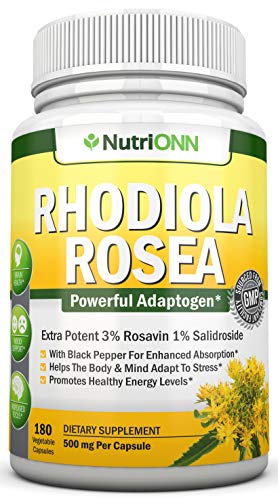
Another area of emerging interest involves the interaction of rhodiola compounds with gut microbial enzymes. A study identified a botanical compound from Rhodiola crenulata, a species related to Rhodiola rosea, as a broad-spectrum inhibitor against certain gut microbial enzymes called β-glucuronidases [3]. These enzymes can play a role in the metabolism of various compounds in the gut, and modulating their activity might have implications for gut health. However, more research is needed to understand the full implications of this finding for human health and the specific relevance of Rhodiola rosea.


Connecting Gut Health to Mood and Stress: The Broader Picture
The link between gut health and mood is a rapidly evolving field. An imbalanced gut microbiota, often referred to as dysbiosis, can contribute to systemic inflammation and alter the production of neuroactive compounds, potentially affecting brain function and emotional well-being [1]. Supporting a diverse and balanced gut microbiome is considered a key strategy for promoting mental resilience [4].
Stress itself can also significantly impact gut health. Chronic stress can alter gut motility, increase intestinal permeability, and modify the gut microbiota composition [5]. This creates a feedback loop where stress negatively affects the gut, which in turn can exacerbate stress and mood challenges. Therefore, approaches that support both stress management and gut integrity may offer a dual benefit.
Rhodiola Rosea, Stress, and the Gut: An Emerging Link
Rhodiola rosea is widely recognized as an adaptogen, meaning it may help the body adapt to physical and psychological stressors. By potentially modulating the body’s stress response, rhodiola might indirectly support gut health, given the strong bidirectional relationship between stress and the gut. While specific studies directly demonstrating Rhodiola rosea‘s adaptogenic effects influencing the gut-brain axis in humans are limited, the general understanding of adaptogens and the gut-brain connection suggests a plausible, albeit unproven, pathway.

It’s important to differentiate between Rhodiola rosea and other Rhodiola species or botanicals, as their specific compounds and effects can vary. For instance, some research on Rhodiola wallichiana var. cholaensis has explored its pharmacological mechanisms in animal models, but these findings do not directly translate to Rhodiola rosea or human applications for gut-brain axis modulation [6]. Similarly, research on other Tibetan herbal medicines, like Oxytropis falcata Bunge, has explored regulation of intestinal microbiota, but this is not specific to Rhodiola rosea [7].

What This Means for Midlife Women
For women experiencing the hormonal shifts and increased stress that can accompany midlife and menopause, understanding the gut-brain axis offers a holistic perspective on well-being. While the direct evidence for rhodiola gut health benefits in humans, particularly for mood and stress via the gut-brain axis, is still limited and emerging, the general principles are compelling. Supporting gut health through diet, lifestyle, and potentially certain botanicals like rhodiola (with appropriate guidance) may contribute to overall resilience.
It is crucial to emphasize that this area of research is nascent. While some early animal studies suggest potential mechanisms, these findings cannot be directly extrapolated to human outcomes or clinical recommendations for Rhodiola rosea and gut-brain axis modulation. Further robust human clinical trials are needed to clarify these potential connections and determine efficacy.

References
- Phytotherapy of mood disorders in the light of microbiota-gut-brain axis. Phytomedicine : international journal of phytotherapy and phytopharmacology, 2023
- Salidroside Alleviates Furan-Induced Impaired Gut Barrier and Inflammation via Gut Microbiota-SCFA-TLR4 Signaling. Journal of agricultural and food chemistry, 2024
- Discovery of a botanical compound as a broad-spectrum inhibitor against gut microbial β-glucuronidases from the Tibetan medicine Rhodiola crenulata. International journal of biological macromolecules, 2024
- Exploring the role of diet in modulating stress and emotional health: a review on mental nutrition and cognitive resilience. Journal of the science of food and agriculture, 2026
- Stress Gastric Ulcers and Cytoprotective Strategies: Perspectives and Trends. Current pharmaceutical design, 2020
- Phenotype-Specific Therapeutic Effect of Rhodiola wallichiana var. cholaensis Combined with Dexamethasone on Experimental Murine Asthma and Its Comprehensive Pharmacological Mechanism. International journal of molecular sciences, 2019
- Tibetan herbal medicine Oxytropis falcata Bunge ameliorates hypoxic pulmonary hypertension in rats via regulation of intestinal microbiota and metabolites. Frontiers in microbiology, 2025
These statements have not been evaluated by the Food and Drug Administration. This information is not intended to diagnose, treat, cure, or prevent any disease. Content is for informational purposes only and is not medical advice; consult a qualified healthcare provider before starting any supplement. As an Amazon Associate we earn from qualifying purchases.
