Navigating midlife and menopause can bring various changes, and for many women, managing stress becomes a significant factor. The body’s response to stress involves a complex system, including the adrenal glands and the hormone cortisol. Understanding how these systems function and what might support their balance can be a valuable part of a holistic approach to well-being during this life stage.
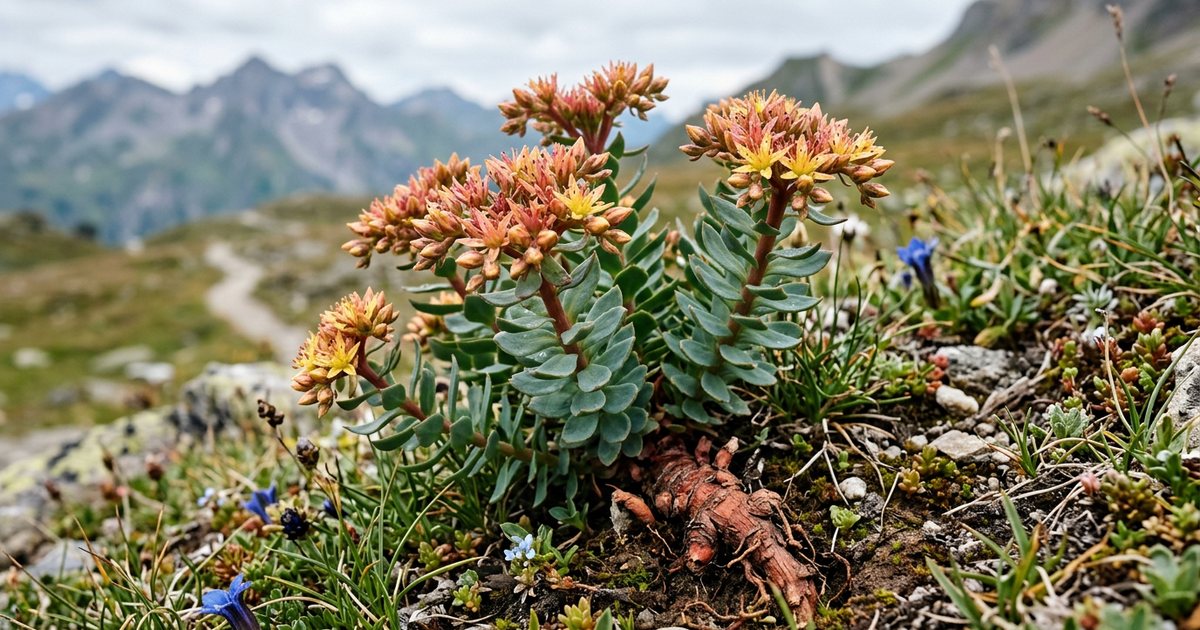
Rhodiola rosea is an adaptogenic herb that has garnered attention for its potential role in supporting the body’s adaptation to stress. This article will explore the current understanding of how rhodiola may influence cortisol levels and adrenal function, drawing on available research to provide an evidence-based perspective for women in midlife.
Understanding Cortisol and the Stress Response
Cortisol is a hormone produced by the adrenal glands, playing a crucial role in the body’s stress response, metabolism, and immune function. When we encounter a stressor, the hypothalamic-pituitary-adrenal (HPA) axis activates, leading to the release of cortisol. This system is designed to help us respond to acute threats, but chronic or prolonged stress can keep the HPA axis activated, potentially leading to sustained higher cortisol levels.
For women in midlife and menopause, fluctuating hormones can sometimes add another layer of complexity to the body’s stress response. Supporting the healthy function of the HPA axis and maintaining balanced cortisol levels is often a focus for overall well-being during this period.
Rhodiola Rosea as an Adaptogen
Rhodiola rosea is classified as an adaptogen, a group of herbs believed to help the body adapt to various stressors, whether physical, chemical, or biological [1]. Adaptogens are thought to exert a normalizing effect on the body’s systems, helping to restore balance without causing overstimulation or suppression. This adaptogenic quality is central to how rhodiola is believed to influence the stress response.

The mechanisms by which adaptogens like rhodiola work are complex and involve multiple systems, including the HPA axis [2][3]. By supporting the body’s ability to cope with stress, rhodiola may help modulate the physiological responses associated with stress, including those involving cortisol.


Rhodiola’s Potential Influence on Cortisol Levels
Research suggests that Rhodiola rosea may have an impact on cortisol levels, particularly in response to stress. Some studies indicate that rhodiola can help to suppress the increase of cortisol under stressful conditions. For example, in an animal model, Rhodiola was observed to modify the response to immobilization stress by suppressing the increase of cortisol [4]. Another animal study found that Rhodiola rosea root powder strongly reduced corticosterone (the rodent equivalent of cortisol) levels induced by chronic stress [5]. Additionally, repeated administration of a Rhodiola rosea L. root extract was shown to reduce acute mild stress corticosterone response in male mice [6].
While these animal studies provide valuable insights, human research on rhodiola and cortisol is still developing. However, the adaptogenic properties that influence the HPA axis suggest a potential role in helping to maintain cortisol balance in humans under stress [2]. A randomized, double-blind, placebo-controlled study involving subjects with stress-related fatigue noted improvements in symptoms, which could indirectly relate to better stress hormone regulation, though direct cortisol measurements were not the primary focus [7].
It’s important to note that the impact on cortisol may vary depending on the specific stressor, the dosage of rhodiola, and individual biological differences. The evidence, while promising, is still moderate and often from animal models or studies that don’t directly measure cortisol as a primary outcome in humans. More extensive human trials specifically focusing on rhodiola’s direct impact on cortisol regulation are needed to fully understand its effects in midlife women.

Supporting Adrenal Function with Rhodiola
The concept of ‘adrenal fatigue’ is widely discussed in wellness circles, often referring to a collection of symptoms like tiredness, difficulty sleeping, and feeling overwhelmed, which are sometimes attributed to chronic stress impacting adrenal function. While ‘adrenal fatigue’ is not a recognized medical diagnosis, the underlying idea of supporting the adrenal glands’ ability to respond healthily to stress is aligned with the adaptogenic properties of rhodiola.
By helping the body adapt to stress and potentially modulating the HPA axis, rhodiola may indirectly support overall adrenal function [2][1]. This support could contribute to a sense of improved well-being and reduced fatigue, which are common concerns during midlife and menopause. For instance, a study on healthy men showed that Rhodiola rosea supplementation had effects on mental performance and physical capacity, which can be influenced by stress and adrenal function [8].
It is crucial to approach discussions around adrenal health with care. Rhodiola is not a ‘cure’ for adrenal issues, but rather a plant that may offer support to the body’s natural stress-response systems. Its role is to help normalize the body’s physiological processes when under stress, rather than directly stimulating or suppressing adrenal activity in a specific direction.
References
- Evidence-based efficacy of adaptogens in fatigue, and molecular mechanisms related to their stress-protective activity. Current clinical pharmacology, 2009
- Modulation of the hypothalamic-pituitary-adrenal (HPA) axis by plants and phytonutrients: a systematic review of human trials. Nutritional neuroscience, 2022
- System-Level, Molecular and Cellular Mechanisms of Selected Plant Adaptogens-A Review. Nutrients, 2026
- The adaptogens rhodiola and schizandra modify the response to immobilization stress in rabbits by suppressing the increase of phosphorylated stress-activated protein kinase, nitric oxide and cortisol. Drug target insights, 2007
- Rhodiola rosea L. roots powder strongly reduces anxiety and corticosterone level induced by chronic stress in a murine model. Journal of pharmaceutical health care and sciences, 2026
- Reduction of acute mild stress corticosterone response and changes in stress-responsive gene expression in male Balb/c mice after repeated administration of a Rhodiola rosea L. root extract. Food science & nutrition, 2019
- A randomised, double-blind, placebo-controlled, parallel-group study of the standardised extract shr-5 of the roots of Rhodiola rosea in the treatment of subjects with stress-related fatigue. Planta medica, 2009
- Effects of Rhodiola rosea supplementation on mental performance, physical capacity, and oxidative stress biomarkers in healthy men. Journal of sport and health science, 2018
These statements have not been evaluated by the Food and Drug Administration. This information is not intended to diagnose, treat, cure, or prevent any disease. Content is for informational purposes only and is not medical advice; consult a qualified healthcare provider before starting any supplement. As an Amazon Associate we earn from qualifying purchases.
