Rhodiola rosea is a hardy adaptogenic herb that grows in cold, mountainous regions of Europe, Asia, and the Arctic. Unlike vitamins or minerals found across many food groups, rhodiola rosea is not a nutrient distributed throughout the food supply, it is the plant itself that contains the active compounds, primarily rosavins and salidroside. Understanding what “foods high in rhodiola rosea” actually means requires a closer look at the herb’s unique biology and what dietary strategies can realistically support your intake of its key constituents.
What Makes Rhodiola Rosea Unique Among Herbal Sources
Rhodiola rosea belongs to the Crassulaceae family and is native to Siberia, Scandinavia, and high-altitude regions of central Asia. The root and rhizome are the parts used medicinally and contain the characteristic bioactive compounds: rosavins (rosavin, rosin, and rosarin), salidroside (also called p-tyrosol glucoside), and tyrosol. These compounds are largely specific to the rhodiola genus and are not found in meaningful amounts in common grocery store foods.
This means the honest answer to “foods high in rhodiola rosea” is a nuanced one. You cannot obtain rosavins from eating broccoli or drinking green tea. However, there are related dietary angles worth exploring, including consuming the plant itself in culinary traditions, understanding precursor compounds found in foods, and recognizing which dietary patterns may support the biological pathways rhodiola influences.
Traditional Culinary Uses of Rhodiola Rosea
In Scandinavian and Siberian traditions, rhodiola rosea has historically been used not only as medicine but also as food. The leaves and stems, particularly young shoots, have been eaten raw in salads or cooked as vegetables in northern Russia and Scandinavia. The root has been used to flavor beverages, including a traditional Siberian tea. These culinary uses represent genuine dietary exposure to the plant’s active compounds, though they are far removed from mainstream Western diets.
Where You Might Find Rhodiola in a Dietary Context
- Herbal teas: Some specialty tea blends include dried rhodiola root or extract. These are the most accessible “food” form outside of supplements.
- Nordic and Russian traditional cuisine: Young rhodiola leaves occasionally appear in seasonal salads or fermented preparations in Scandinavian countries.
- Adaptogenic food products: A growing market of functional foods, including energy bars, lattes, and powdered drink mixes, incorporates rhodiola extract as an ingredient.
- Tinctures and liquid extracts: While technically supplements, alcohol-based or glycerin tinctures sit in a gray area between food and medicine in many traditional systems.
Related Compounds Found in Everyday Foods
Although rosavins are unique to rhodiola, salidroside and its precursor tyrosol appear in a small number of other foods. Tyrosol, a phenylethanol compound, is found in olive oil, particularly extra-virgin olive oil, and in fermented foods like wine and beer. Salidroside itself is present in trace amounts in some willow species and a few other plants, though not in quantities comparable to rhodiola root.
The amino acid tyrosine, found abundantly in high-protein foods, is a metabolic precursor in the biosynthetic pathway that leads to tyrosol and salidroside. Consuming adequate dietary tyrosine does not directly produce salidroside in the human body, but it reflects a shared biochemical family. This connection is largely academic rather than practically useful for boosting rhodiola-like activity through diet alone.
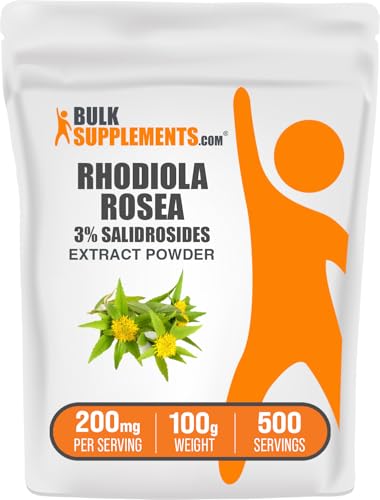

For a broader look at how adaptogenic plants compare in terms of active constituents, see our overview at benefits and science.
Top Dietary Sources and Related Foods at a Glance
| Source | Relevant Compound(s) | Practical Availability | Notes |
|---|---|---|---|
| Rhodiola rosea root (dried/tea) | Rosavins, salidroside, tyrosol | Specialty health stores, online retailers | Most direct dietary source; variable potency |
| Rhodiola rosea young leaves | Salidroside, tyrosol (lower concentrations) | Very limited; foraged or specialty markets | Traditional Scandinavian/Siberian culinary use |
| Extra-virgin olive oil | Tyrosol, hydroxytyrosol | Widely available | Contains tyrosol but not rosavins; different compound profile |
| Adaptogenic functional foods (bars, lattes) | Rhodiola extract (standardized or unstandardized) | Growing availability in health food stores | Amounts vary widely; read labels carefully |
| Herbal teas containing rhodiola | Rosavins, salidroside (low to moderate) | Health food and specialty tea shops | Bioavailability from hot water extraction is uncertain |
| High-protein foods (eggs, meat, legumes) | L-tyrosine (precursor amino acid) | Universally available | Metabolic precursor only; does not provide rhodiola compounds directly |
Who Might Struggle to Get Enough From Diet Alone
Practically speaking, almost everyone in a modern Western diet will get negligible amounts of rhodiola’s active compounds from food. The plant is not cultivated as a food crop at scale, it is not part of standard nutritional guidelines, and the culinary traditions that used it are geographically and culturally specific. This is not a gap created by dietary choices like veganism or food allergies, it is simply a matter of the herb not being a food staple anywhere outside of a narrow geographic and historical tradition.
People who may be particularly interested in sourcing rhodiola through diet or food-adjacent means include:
- Those who prefer whole-herb preparations over isolated extracts for philosophical or tolerability reasons.
- Individuals in Scandinavian or northern Russian communities with access to traditional food practices.
- People avoiding concentrated supplement products due to medication interactions or sensitivity to standardized extracts.
- Those exploring general adaptogenic dietary patterns who want food-first approaches, understanding that rhodiola cannot fully be replicated this way.
For anyone in these groups, herbal teas made with dried rhodiola root represent the most food-like option available, though the dose delivered is lower and less consistent than a standardized supplement. Learn more about how different preparation methods affect bioactive content at our science section.
Dietary Sources vs. Supplements: An Honest Comparison
Standardized rhodiola rosea supplements are typically manufactured to contain a defined percentage of rosavins (commonly around 3%) and salidroside (commonly around 1%), following a quality benchmark established in research and referenced in resources like the NIH Office of Dietary Supplements. This standardization is essentially impossible to replicate through dietary consumption of the plant. It is worth knowing how well the label holds up even in supplements: when researchers measured seven commercial R. rosea extracts, they found a high degree of variation in both marker compounds, and one extract sourced from China contained no rosavin at all[1].

When you brew rhodiola root as a tea, the extraction efficiency of individual compounds will depend on water temperature, steeping time, the age and origin of the root, and how it was dried and stored. Functional food products that incorporate rhodiola extract vary even more widely, and many do not disclose the specific extract standard used. There is also a question of which Rhodiola you are actually getting. When DNA barcoding was applied to 100 commercial Rhodiolae Crenulatae decoction-piece samples bought from drug stores and hospitals in China, only 40% were the labelled species; most of the rest were other Rhodiola species, and about 10% turned out to be R. rosea[2]. That survey covered a different product category than a Western capsule, but it shows why an unstandardized whole-herb or food product carries an identity risk a tested, standardized extract does not.
The practical conclusion is straightforward: if the goal is a consistent, research-aligned intake of rhodiola’s active compounds, supplements that are independently tested and standardized offer something dietary sources simply cannot match. Dietary or tea-based consumption of the plant may still offer mild benefits and is generally considered safe for most adults, but it should be understood as a different category of exposure rather than a dietary equivalent to supplementation.
For guidance on evaluating supplement quality and what to look for on a product label, visit our supplement guidance resources.

Frequently Asked Questions
Are there any common foods that naturally contain rhodiola rosea?
No common grocery store foods contain rhodiola rosea. The plant is specific to cold mountain environments and is not cultivated as a food crop in most parts of the world. The closest dietary sources are herbal teas made with dried rhodiola root, specialty functional food products that add rhodiola extract, and traditional preparations from Nordic and Siberian culinary traditions. Tyrosol, one of rhodiola’s minor compounds, is also found in extra-virgin olive oil, but the overall compound profile is entirely different.


Can eating more protein increase rhodiola-like effects in the body?
Not meaningfully. While the amino acid tyrosine is part of the biosynthetic pathway that produces tyrosol and related compounds, the human body does not synthesize salidroside or rosavins. These are plant-specific metabolites produced by rhodiola rosea through its own enzymatic processes. Eating more protein will support general neurotransmitter production and overall wellness, but it will not replicate the adaptogenic effects associated with rhodiola supplementation.
Is drinking rhodiola tea a good substitute for taking a supplement?
Rhodiola tea provides a gentler, more food-like form of exposure to the plant and is a reasonable choice for people who prefer this approach or are sensitive to concentrated extracts. However, it should not be considered a direct substitute for a standardized supplement if a specific therapeutic intent is the goal. The concentration of rosavins and salidroside in a tea preparation is lower and variable compared to a supplement standardized to defined percentages of these compounds.
Are adaptogenic food products that list rhodiola on the label worth buying?
These products can be a convenient way to incorporate rhodiola into daily routines, but quality varies considerably, and that variation is measured rather than hypothetical: an analysis of seven commercial extracts found wide differences in salidroside and rosavin content, including one with no detectable rosavin[1]. Some products use unstandardized extracts or do not disclose the extract ratio or total rosavin content. Before purchasing, look for products that specify a standardized extract, ideally with third-party testing certification. Treat these as supplemental products rather than functional foods, and apply the same scrutiny you would to a capsule-based supplement.
Is rhodiola rosea safe to consume as a food or herb without a supplement label?
Rhodiola rosea root prepared as a tea or used in traditional culinary contexts has a long history of use in populations across northern Europe and Asia, and it is generally considered well tolerated by healthy adults. That said, the herb can interact with certain medications, including those that affect serotonin levels, and may not be appropriate during pregnancy or for individuals with bipolar disorder. Anyone with a health condition or taking medications should consult a qualified healthcare provider before regular use, whether through food preparations or supplements. This article is for general informational purposes only and does not constitute medical advice.
References
- Assessing the quality and potential efficacy of commercial extracts of Rhodiola rosea L. by analyzing the salidroside and rosavin content and the electrophysiological activity in hippocampal long-term potentiation, a synaptic model of memory. Frontiers in pharmacology, 2018
- Survey of commercial Rhodiola products revealed species diversity and potential safety issues. Scientific reports, 2015
These statements have not been evaluated by the Food and Drug Administration. This information is not intended to diagnose, treat, cure, or prevent any disease. Content is for informational purposes only and is not medical advice; consult a qualified healthcare provider before starting any supplement. As an Amazon Associate we earn from qualifying purchases.
