Navigating perimenopause often involves seeking ways to support well-being. Rhodiola rosea is a botanical that has garnered interest for its potential adaptogenic properties, which may help the body adapt to various stressors. When considering a supplement like Rhodiola rosea, understanding appropriate dosage and timing is key.
This article provides an evidence-based overview of Rhodiola rosea dosage perimenopause and timing considerations, drawing from available research. It’s important to remember that individual responses can vary, and this information is for educational purposes, not medical advice.
Understanding Rhodiola Rosea Extracts
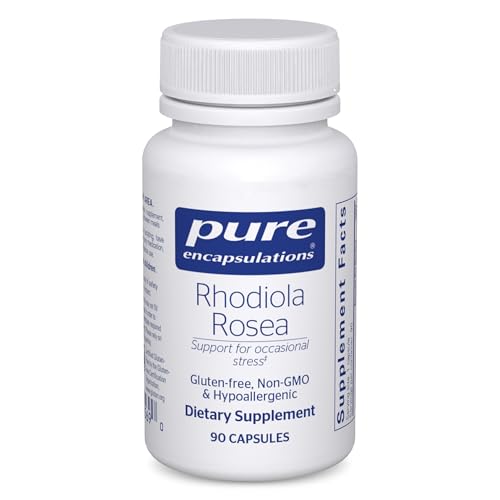
Rhodiola rosea supplements typically come as extracts, meaning specific compounds are concentrated from the plant. The most commonly studied extracts are standardized to contain specific amounts of rosavins and salidroside, which are believed to be the primary active compounds. Different products may have varying concentrations, so always check the product label.
The effectiveness of a Rhodiola rosea supplement is often linked to the quality and standardization of its extract. Research studies frequently specify the type of extract used, such as SHR-5, which has been investigated in various clinical trials [1][2][3].


General Dosage Ranges Explored in Research
Research into Rhodiola rosea has explored a range of dosages for various purposes. For supporting individuals with mild to moderate depression, one study used a Rhodiola rosea L. extract SHR-5 at dosages of 340 mg/day or 680 mg/day [1]. Another study investigating its effects on physical and cognitive deficiencies in adults used 200 mg of Rhodiola rosea extract per day [3].
In subjects experiencing prolonged or chronic fatigue symptoms, an open-label trial explored the use of a Rhodiola rosea extract at 400 mg per day [4]. For nursing students experiencing mental and physical fatigue, a randomized controlled trial used 360 mg/day of Rhodiola rosea extract [2]. These examples illustrate that dosages can vary depending on the focus of the study and the specific extract used.

Rhodiola Dosage Perimenopause: Specific Considerations
While there isn’t extensive research specifically on Rhodiola rosea dosage perimenopause, the general dosage ranges explored in studies for fatigue, mood support, and cognitive function may offer some guidance. Perimenopause often involves experiences such as fatigue, mood changes, and cognitive shifts, which overlap with areas where Rhodiola rosea has been investigated.
For example, if a woman in perimenopause is considering Rhodiola rosea for general support of energy levels or to help with feelings of fatigue, a dosage in the range of 200-400 mg of a standardized extract per day, similar to those used in studies for fatigue [4][2], might be a starting point for discussion with a healthcare provider. Higher dosages, such as 680 mg/day, have been explored in studies related to mood [1].

Timing and Administration of Rhodiola Rosea
The timing of Rhodiola rosea intake can be a factor to consider. Many studies administer Rhodiola rosea once or twice daily. Some individuals prefer to take adaptogens like Rhodiola rosea in the morning or early afternoon to potentially avoid any impact on sleep, though research specifically on this timing for Rhodiola rosea is limited.
For instance, studies investigating its impact on fatigue or mental performance often involve daily administration. One study explored the impact of Rhodiola rosea extract on strength performance, with participants taking the supplement daily [5]. Another trial exploring its use alongside sertraline for major depressive disorder administered Rhodiola capsules twice daily [6]. It is generally suggested to follow the instructions on the product label or guidance from a healthcare professional.
Duration of Use and Consistency
The duration for which Rhodiola rosea has been studied also varies. Some trials have lasted several weeks, such as a 6-week trial for mild to moderate depression [1] or a 12-week drug monitoring study in adults with physical and cognitive deficiencies [3]. A study on individuals with prolonged or chronic fatigue symptoms involved an 8-week open-label trial [4].
Consistency in taking Rhodiola rosea, as with many botanical supplements, is often considered important to allow the body to potentially respond over time. The adaptogenic effects of Rhodiola rosea may become more apparent with regular use rather than sporadic intake.
Factors Influencing Individual Response
Individual responses to Rhodiola rosea can vary based on several factors, including genetics, overall health, lifestyle, and the specific concerns being addressed. What works for one person may not be the same for another. The quality and standardization of the Rhodiola rosea extract are also crucial, as different products can have varying potencies.
It is always advisable to start with a lower dose and observe how your body responds, particularly when exploring a new supplement during perimenopause. Adjustments can then be made under the guidance of a healthcare provider.
References
- Clinical trial of Rhodiola rosea L. extract SHR-5 in the treatment of mild to moderate depression. Nordic journal of psychiatry, 2007
- Rhodiola rosea for mental and physical fatigue in nursing students: a randomized controlled trial. PloS one, 2014
- Efficacy and tolerability of a Rhodiola rosea extract in adults with physical and cognitive deficiencies. Advances in therapy, 2007
- Rhodiola rosea in Subjects with Prolonged or Chronic Fatigue Symptoms: Results of an Open-Label Clinical Trial. Complementary medicine research, 2017
- The Impact of Rhodiola Rosea Extract on Strength Performance in Alternative Bench-Press and Bench-Pull Exercises Under Resting and Mental Fatigue Conditions: A Randomized, Triple-Blinded, Placebo-Controlled, Crossover Trial. Nutrients, 2025
- Antidepressants effects of Rhodiola capsule combined with sertraline for major depressive disorder: A randomized double-blind placebo-controlled clinical trial. Journal of affective disorders, 2020
These statements have not been evaluated by the Food and Drug Administration. This information is not intended to diagnose, treat, cure, or prevent any disease. Content is for informational purposes only and is not medical advice; consult a qualified healthcare provider before starting any supplement. As an Amazon Associate we earn from qualifying purchases.
