Unlike vitamins or minerals found in everyday food, rhodiola rosea is not something you can get through a typical diet. Its active compounds are concentrated almost entirely in the root of the plant itself.
Understanding where rhodiola actually comes from helps explain why supplementation, rather than diet, is the practical way most people access it.
This post contains affiliate links. As an Amazon Associate we earn from qualifying purchases, at no extra cost to you.
The Plant, Not the Food Supply
Rhodiola rosea is a succulent flowering plant that grows wild in cold, high-altitude regions and is not part of any common food crop or cuisine.
It belongs to the family Crassulaceae and is long established as a medicinal plant in Russia, Scandinavia and a number of other countries, where it is the extract of the root, rather than any edible part of the plant, that has been used[1].
It is not found in meaningful amounts in vegetables, fruits, grains, or other foods most people eat regularly.
The Root Is Where the Compounds Live
The rosavins and salidroside responsible for rhodiola’s effects are concentrated in the root and rhizome of the plant, which is the part harvested for supplements.
The phytochemical literature bears this out. A review of the species catalogued roughly 140 compounds isolated specifically from the roots and rhizome, which is the plant material standardized extracts are made from[2].
The above-ground leaves and flowers contain far lower concentrations and are generally not used in standardized extracts.
Plant physiology work comparing the two tissues found that the gene for tyrosine decarboxylase, an enzyme in the salidroside biosynthesis pathway, is expressed in leaves as well as roots but significantly more in roots, which matches the observation that salidroside accumulates preferentially in the underground parts of the plant[3].

Traditional Tea Preparations
In regions where rhodiola grows natively, dried root has traditionally been steeped as a tea, though this method delivers a much less consistent dose than a standardized extract.
Tea preparations can vary widely in strength depending on the root quality and steeping time, making dosing difficult to control.
How the root is extracted measurably changes what ends up in the cup. When dried underground organs were compared against aqueous and ethanolic dry extracts of the same plant, the extracts were richer in phenolic compounds than the dried root itself, and the solvent used determined how much of each compound was recovered[4].
Why Supplementation Is the Practical Route
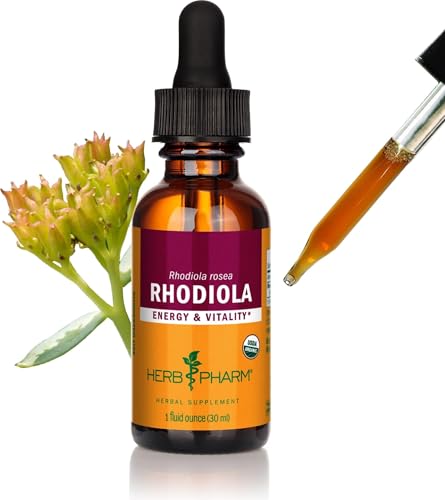
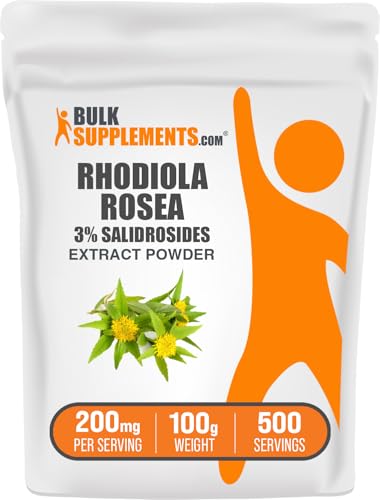
Because rhodiola is not part of the food supply and home tea preparation is inconsistent, most people who want a reliable dose use a standardized capsule or tincture extract instead.
Standardized extracts list their rosavin and salidroside percentages, which gives a much clearer sense of what you are actually consuming compared to homemade preparations.
A label is not a guarantee of uniformity, though. An analysis of commercial rhodiola samples found that their chemical composition and their measured antioxidant activity differed from product to product[5], so the percentages on a label are a starting point for comparison rather than a promise that two products are interchangeable.

Frequently Asked Questions
Can I get rhodiola from my regular diet?
No. It is not part of any common food crop, so diet alone will not provide it.
Which part of the plant is used?
The root and rhizome, where the active rosavin and salidroside compounds are concentrated.
Is rhodiola tea as effective as a standardized extract?
Homemade tea preparations tend to have much less consistent potency than standardized capsule or tincture extracts, making dosing harder to control.
Are the leaves or flowers of rhodiola used in supplements?
Generally no. Supplements are made from the root, since that is where the relevant compounds are concentrated.
Where does supplement-grade rhodiola come from?
It is typically cultivated commercially or sustainably wild-harvested from regions where the plant naturally grows, then processed into standardized extract.
Commercial cultivation is not hypothetical: research on the species has been run on cultivated plant material using named varieties such as the cultivars Mattmark and Rosavine, with the extracts prepared from the roots and rhizomes of that cultivated stock[6].
These statements have not been evaluated by the FDA. This product is not intended to diagnose, treat, cure, or prevent any disease.
References
- Rhodiola rosea: A Versatile Adaptogen. Compr Rev Food Sci Food Saf, 2005
- Rosenroot (Rhodiola rosea): traditional use, chemical composition, pharmacology and clinical efficacy. Phytomedicine, 2010
- Isolation and genotype-dependent, organ-specific expression analysis of a Rhodiola rosea cDNA encoding tyrosine decarboxylase. J Plant Physiol, 2009
- Antioxidant and Antibacterial Activity of Roseroot (Rhodiola rosea L.) Dry Extracts. Molecules, 2018
- Chemical Composition, Antioxidant and Anti-Enzymatic Activity of Golden Root (Rhodiola rosea L.) Commercial Samples. Antioxidants (Basel), 2022
- Rhodiola rosea Reduces Intercellular Signaling in Campylobacter jejuni. Antibiotics (Basel), 2022
These statements have not been evaluated by the Food and Drug Administration. This information is not intended to diagnose, treat, cure, or prevent any disease. Content is for informational purposes only and is not medical advice; consult a qualified healthcare provider before starting any supplement. As an Amazon Associate we earn from qualifying purchases.
