One of the most common questions from first-time users is how quickly rhodiola rosea actually starts to produce noticeable effects, especially compared to fast-acting stimulants like caffeine.
The honest answer is that the timeline varies by person and by what outcome you are hoping to notice, whether that is mental clarity, mood, or physical stamina.
This post contains affiliate links. As an Amazon Associate we earn from qualifying purchases, at no extra cost to you.
Short-Term Effects
Some people report a subtle sense of mental clarity or reduced perceived fatigue within the first few hours of taking a dose, though this is far less pronounced than a stimulant effect.
There is trial evidence that a single dose can produce something measurable. A randomised, double-blind, placebo-controlled study in 161 cadets aged 19 to 21 tested one dose of a standardized extract against placebo and recorded a pronounced anti-fatigue effect on a composite index the same day[1].
This early response, when it happens, tends to be mild and is not something everyone notices right away.
Building Effects Over Days to Weeks
Most of the research supporting rhodiola for stress and fatigue involves daily use over several weeks rather than a single dose, suggesting its more meaningful effects build gradually.
The trial durations show the pattern. A double-blind crossover study gave 56 physicians a repeated low daily dose across two-week periods during night duty and found a statistically significant improvement in mental-fatigue testing[2], while a phase III trial in 60 adults with stress-related fatigue ran for 28 days at 576 mg of extract per day[3].
This pattern is typical of adaptogens generally, which are usually described as working with the body’s stress response over time rather than providing an immediate jolt.

Setting Realistic Expectations
If you are trying rhodiola for the first time, it is reasonable to commit to at least three to four weeks of consistent daily use before drawing conclusions about whether it is working for you.
That window is roughly where the published trials sit. A study of 80 mildly anxious participants taking 200 mg twice daily assessed outcomes across 14 days and reported reductions in self-reported anxiety, stress and confusion, with the authors noting the changes appeared gradually rather than abruptly[4].
Expecting an immediate, dramatic shift is more likely to lead to disappointment than expecting a gradual, subtle change in how you handle daily stress.
Factors That Influence the Timeline
Dose, extract standardization, individual baseline stress levels, and consistency of daily use all appear to influence how quickly someone notices an effect.
Skipping doses or using an unstandardized, low-quality extract is one of the most common reasons people feel like rhodiola ‘isn’t working’ when the real issue is inconsistent use.
Frequently Asked Questions
How fast does rhodiola work?
Some people notice mild effects within hours, but the more consistent benefits reported in research generally build over several weeks of daily use.
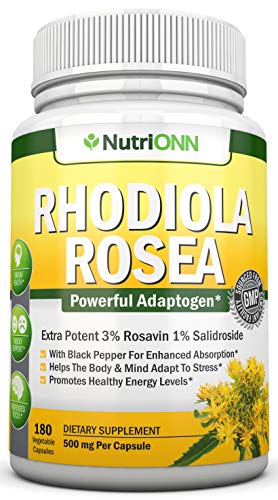


Should I expect an immediate energy boost?
Not in the way a stimulant works. Rhodiola is generally described as subtle and gradual rather than an immediate jolt.
How long should I try it before deciding if it works?
Most people give it at least three to four weeks of consistent daily use before evaluating whether they notice a difference.
Does taking a higher dose make it work faster?
Not necessarily, and higher doses raise the risk of side effects like jitteriness or irritability. Consistency at a moderate dose is generally considered more useful than dose escalation.
Why do some people feel nothing at all?
Individual response varies, and factors like extract quality, dose, and consistency all play a role in whether someone notices an effect.
These statements have not been evaluated by the FDA. This product is not intended to diagnose, treat, cure, or prevent any disease.
References
- A randomized trial of two different doses of a SHR-5 Rhodiola rosea extract versus placebo and control of capacity for mental work. Phytomedicine, 2003
- Rhodiola rosea in stress induced fatigue: a double blind cross-over study of a standardized extract SHR-5 with a repeated low-dose regimen on the mental performance of healthy physicians during night duty. Phytomedicine, 2000
- A randomised, double-blind, placebo-controlled, parallel-group study of the standardised extract SHR-5 of the roots of Rhodiola rosea in the treatment of subjects with stress-related fatigue. Planta Med, 2009
- The Effects of Rhodiola rosea L. Extract on Anxiety, Stress, Cognition and Other Mood Symptoms. Phytother Res, 2015
These statements have not been evaluated by the Food and Drug Administration. This information is not intended to diagnose, treat, cure, or prevent any disease. Content is for informational purposes only and is not medical advice; consult a qualified healthcare provider before starting any supplement. As an Amazon Associate we earn from qualifying purchases.
