Rhodiola rosea, often referred to as ‘golden root,’ is an herb that has garnered attention for its classification as an adaptogen. This term describes substances that may help the body adapt to various stressors, whether physical, chemical, or biological, and support overall balance [1].
For women navigating midlife and menopause, understanding the potential ways Rhodiola rosea might interact with the body’s systems can be helpful. This article explores the current understanding of the rhodiola mechanism adaptogen properties and how its active compounds are thought to exert their effects.
What Does ‘Adaptogen’ Mean for Rhodiola Rosea?
The concept of an adaptogen suggests a substance that helps the body normalize physiological functions and maintain homeostasis under challenging conditions [1]. Adaptogens are generally understood to be non-specific in their action, meaning they may support the body’s resilience to a range of stressors rather than targeting a single issue. They are also considered to have a normalizing effect on bodily functions, helping to bring them back towards a balanced state [2].
Rhodiola rosea is recognized as a classic adaptogen, alongside other well-known botanicals like Withania somnifera (Ashwagandha) [2]. Its adaptogenic properties are believed to contribute to its potential to support the body’s capacity to handle various demands encountered in daily life, including those that might arise during midlife transitions [1].


Key Active Compounds: Rosavins and Salidroside
The adaptogenic effects of Rhodiola rosea are primarily attributed to its unique phytochemical profile, with two groups of compounds, rosavins and salidroside, considered particularly important [1]. These compounds are believed to work synergistically, contributing to the herb’s overall biological activities. While other compounds are present, rosavins and salidroside are often standardized in Rhodiola rosea extracts, suggesting their recognized significance in its adaptogenic properties.
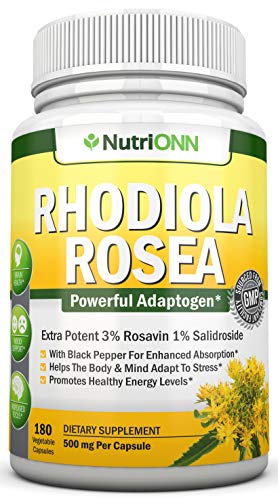
Salidroside, in particular, has been the subject of research into its potential effects on various bodily systems. Studies have explored its involvement in processes related to neuroprotection and inflammation [3]. For instance, salidroside has been investigated for its potential to alleviate cognitive impairment by influencing cellular pathways, such as inhibiting ferroptosis via the Nrf2/GPX4 axis [4]. It has also been shown to potentially intensify mitochondrial function in certain cell types by stimulating specific signaling pathways [5]. These findings offer insights into how these compounds might contribute to the broader adaptogenic actions of Rhodiola rosea.
Influencing Stress Response Pathways
One of the core aspects of the rhodiola mechanism adaptogen action involves its potential influence on the body’s stress response systems. While the exact mechanisms are still being elucidated, research suggests that Rhodiola rosea may interact with pathways involved in the body’s reaction to stress [2]. This could involve modulating the activity of certain neurotransmitters and hormones that play a role in how we perceive and respond to stressful situations.

By potentially supporting the balance of these intricate systems, Rhodiola rosea may help the body maintain a more stable internal environment even when faced with external challenges. This non-specific support for physiological balance is a hallmark of adaptogenic substances, distinguishing them from substances that target specific symptoms or conditions [1].
Potential Anti-Inflammatory and Neuroplasticity Support
Beyond its direct influence on stress response, research also suggests that Rhodiola rosea may possess anti-inflammatory properties [6]. Chronic, low-grade inflammation is a factor in various health considerations, particularly during midlife. By potentially modulating inflammatory pathways, Rhodiola rosea may contribute to overall cellular health and resilience [7]. Salidroside, one of Rhodiola rosea’s active compounds, has been specifically highlighted in reviews for its anti-neuroinflammatory effects [7].

Furthermore, some research has explored Rhodiola rosea’s potential to influence neuroplasticity, which refers to the brain’s ability to reorganize itself by forming new neural connections [8]. Maintaining neuroplasticity can be important for cognitive function and overall brain health as individuals age. While more research is needed to fully understand these complex interactions in humans, these areas of investigation offer further insights into the broad adaptogenic potential of Rhodiola rosea [8].
Mitochondrial Function and Cellular Energy
Mitochondria are often referred to as the ‘powerhouses’ of the cell, responsible for generating most of the chemical energy needed to power biochemical reactions. Maintaining healthy mitochondrial function is crucial for overall cellular vitality and energy levels, which can be particularly relevant during midlife transitions [9].
Studies have indicated that salidroside, a key compound in Rhodiola rosea, may play a role in supporting mitochondrial function. For instance, salidroside was observed to intensify mitochondrial function in certain damaged cells by stimulating specific signaling pathways [5]. By potentially supporting cellular energy production, Rhodiola rosea’s adaptogenic actions might extend to supporting overall physiological resilience and energy levels.
References
- Rosenroot (Rhodiola rosea): traditional use, chemical composition, pharmacology and clinical efficacy. Phytomedicine : international journal of phytotherapy and phytopharmacology, 2010
- Clinical evidence for the adaptogenic effects of Withania somnifera and Rhodiola rosea – A systematic review with molecular interpretation of psychometric outcomes. Annals of agricultural and environmental medicine : AAEM, 2026
- Effect of salidroside on neuroprotection and psychiatric sequelae during the COVID-19 pandemic: A review. Biomedicine & pharmacotherapy = Biomedecine & pharmacotherapie, 2024
- Salidroside alleviates cognitive impairment by inhibiting ferroptosis via activation of the Nrf2/GPX4 axis in SAMP8 mice. Phytomedicine : international journal of phytotherapy and phytopharmacology, 2023
- Salidroside intensifies mitochondrial function of CoCl(2)-damaged HT22 cells by stimulating PI3K-AKT-MAPK signaling pathway. Phytomedicine : international journal of phytotherapy and phytopharmacology, 2023
- Anti-inflammatory effects of Rhodiola rosea L.: A review. Biomedicine & pharmacotherapy = Biomedecine & pharmacotherapie, 2020
- Anti-Neuroinflammatory Effects of Adaptogens: A Mini-Review. Molecules (Basel, Switzerland), 2024
- Exploring the effect of adaptogenic Rhodiola Rosea extract on neuroplasticity in humans. Complementary therapies in medicine, 2018
- Therapeutic targets of neuroprotection and neurorestoration in ischemic stroke: Applications for natural compounds from medicinal herbs. Biomedicine & pharmacotherapy = Biomedecine & pharmacotherapie, 2022
These statements have not been evaluated by the Food and Drug Administration. This information is not intended to diagnose, treat, cure, or prevent any disease. Content is for informational purposes only and is not medical advice; consult a qualified healthcare provider before starting any supplement. As an Amazon Associate we earn from qualifying purchases.
