Navigating midlife and menopause often involves considering various supplements to support well-being. Rhodiola rosea is a botanical often discussed for its adaptogenic properties. As with any supplement, understanding its potential interactions with other substances, such as alcohol, is important for informed choices.
This article aims to provide an evidence-based overview of what is currently known about rhodiola alcohol interaction. It’s important to note that research in this specific area is limited, and this information is for educational purposes only, not medical advice.
What is Rhodiola Rosea?
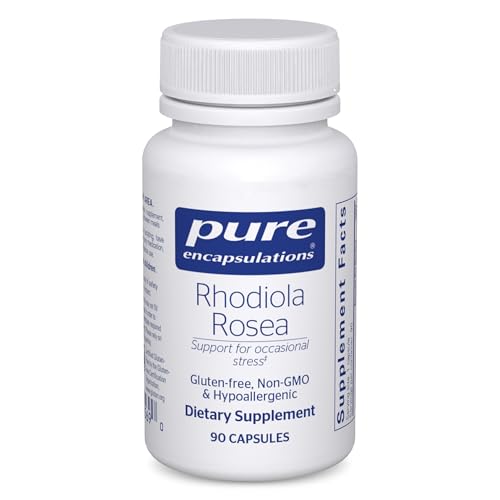
Rhodiola rosea, also known as rosenroot, is a perennial plant with a long history of traditional use, particularly in Eastern Europe and Asia. It is often categorized as an adaptogen, meaning it may help the body adapt to various stressors [1]. The plant’s roots are typically used to create extracts for supplemental use.
The chemical composition of Rhodiola rosea includes several compounds thought to be responsible for its effects, such as rosavins and salidroside [1]. These compounds are extensively studied for their various biological activities.


Understanding Alcohol’s Impact on the Body
Alcohol, or ethanol, is a psychoactive substance that can affect various bodily systems. Its consumption can influence the central nervous system, liver function, and overall metabolic processes. The way alcohol is processed in the body involves a complex series of enzymatic reactions.
When alcohol is consumed, it is primarily metabolized by the liver. This process involves enzymes that break down alcohol into other compounds, which are then further processed and eliminated from the body. Excessive alcohol consumption can place a significant burden on the liver and other organs.
Rhodiola Rosea and Alcohol: The Current Evidence
Research specifically on rhodiola alcohol interaction in humans is very limited. While Rhodiola rosea has been studied for various potential applications [2], direct interactions with alcohol have not been studied in people. The alcohol-related research on this plant is animal work on alcohol-induced organ damage rather than on the combination itself: rosavin, one of Rhodiola rosea’s characteristic constituents, reduced alcohol-induced fat accumulation and liver injury in rodents, which says nothing about what happens when a person drinks while taking it[3].
Some research has explored the biotransformation of certain compounds within Rhodiola rosea. For instance, studies have identified glycosides produced by the biotransformation of cinnamyl alcohol in Rhodiola rosea compact callus aggregates [4]. This research focuses on the plant’s internal biochemical processes rather than interactions with ingested alcohol in humans.
It’s important to distinguish between the plant’s internal metabolism and how it might interact with external substances like alcohol when consumed by a person. The available evidence does not provide clear guidance on the safety or effects of combining Rhodiola rosea supplements with alcohol consumption.
Potential Theoretical Considerations
Given the limited direct evidence on rhodiola alcohol interaction, any discussion of potential interactions relies on theoretical considerations or indirect evidence from other areas of research. For example, some research has explored the manipulation of catechol-O-methyl-transferase (COMT) activity in relation to substance-seeking behavior, a subtype of Reward Deficiency Syndrome (RDS), and its dependence on gene polymorphisms [5]. While this touches on broader neurological pathways, it does not directly address Rhodiola rosea’s interaction with alcohol.


Other plant extracts, such as Ashwagandha (Withania somnifera), have been investigated for their effects on the cytochrome P450 system, which is involved in drug metabolism [6]. Similarly, Bacopa monnieri and Withania somnifera have been studied for reducing oxidative stress in microglia cells [7]. However, these studies are on different botanicals and do not offer direct insights into Rhodiola rosea and alcohol interactions. This highlights the need for specific research on Rhodiola rosea to understand its safety profile when combined with alcohol.
Safety and Responsible Use
Without specific research on rhodiola alcohol interaction, it is prudent to exercise caution. General safety advice for supplements often recommends avoiding alcohol consumption when taking new supplements, especially if their interactions are unknown.
For women navigating midlife and menopause, who may be experiencing various physiological changes, being mindful of all substances consumed is particularly important. This includes both dietary choices and supplement use, especially when combined with alcohol.
References
- Rosenroot (Rhodiola rosea): traditional use, chemical composition, pharmacology and clinical efficacy. Phytomedicine : international journal of phytotherapy and phytopharmacology, 2010
- [Experimental analysis of therapeutic properties of Rhodiola rosea L. and its possible application in medicine]. Medicina (Kaunas, Lithuania), 2004
- Rosavin ameliorates alcoholic fatty liver disease through PPARG-dependent inhibition of the p38 MAPK and IGF-1 pathways. Biochemical pharmacology, 2026
- LC/MS/MS identification of glycosides produced by biotransformation of cinnamyl alcohol in Rhodiola rosea compact callus aggregates. Biomedical chromatography : BMC, 2004
- Manipulation of catechol-O-methyl-transferase (COMT) activity to influence the attenuation of substance seeking behavior, a subtype of Reward Deficiency Syndrome (RDS), is dependent upon gene polymorphisms: a hypothesis. Medical hypotheses, 2007
- Ashwagandha (Withania somnifera) Plant Extracts Affect the Cytochrome P450 System and Cytotoxicity of Primary Human Hepatocytes. Journal of dietary supplements, 2025
- Novel Combination of Choline with Withania somnifera (L.) Dunal, and Bacopa monnieri (L.) Wetts Reduced Oxidative Stress in Microglia Cells, Promoting Neuroprotection. International journal of molecular sciences, 2023
These statements have not been evaluated by the Food and Drug Administration. This information is not intended to diagnose, treat, cure, or prevent any disease. Content is for informational purposes only and is not medical advice; consult a qualified healthcare provider before starting any supplement. As an Amazon Associate we earn from qualifying purchases.
