Navigating midlife and menopause can bring unique stressors, and understanding how the body responds at a cellular level is key to supporting well-being. Rhodiola rosea, an adaptogenic herb, has garnered attention for its potential role in modulating the stress response.
Adaptogens are substances that may help the body adapt to various stressors. This article will explore some of the cellular mechanisms by which Rhodiola rosea, through its active compounds, is thought to influence the body’s stress response, providing an evidence-based perspective.
Rhodiola Rosea as an Adaptogen: A Foundational Understanding
Rhodiola rosea is recognized as an adaptogen, a classification shared with other herbs used in traditional systems, such as Ayurvedic medicine [1]. Adaptogens are understood to have a stimulating effect and may contribute to improved stress tolerance [2][3]. This adaptogenic quality is central to how Rhodiola is believed to support the body’s response to various challenges.
The concept of adaptogens involves their ability to help the body maintain balance when faced with physical, chemical, or biological stressors. This generalized support, rather than targeting a specific system, is a hallmark of adaptogenic action. Research continues to explore the intricate ways these compounds interact with cellular processes to exert their effects [4].


Modulating the Hypothalamic-Pituitary-Adrenal (HPA) Axis
The HPA axis is a central neuroendocrine system that regulates the body’s response to stress. When activated, it leads to the release of stress hormones like cortisol. Dysregulation of the HPA axis can contribute to various challenges associated with prolonged stress.

Some research suggests that compounds found in Rhodiola rosea, such as salidroside, may influence the activity of the HPA axis. For instance, salidroside has been observed to affect the hyperactivity of the HPA axis in certain rat models [5]. This potential modulation could be one way Rhodiola contributes to a balanced stress response, though more human-specific research is needed.
Influence on Inflammatory Pathways
Stress, particularly chronic stress, can be linked to inflammatory processes in the body. Neuroinflammation, an inflammatory response within the brain or spinal cord, is an area of ongoing research regarding adaptogens. Rhodiola rosea has shown anti-neuroinflammatory effects [6], suggesting a potential role in supporting neurological health during stressful periods.
Specific studies have investigated how Rhodiola rosea can modulate inflammatory processes. For example, in a CRH-activated BV2 cell model (a type of microglial cell used to study brain inflammation), Rhodiola rosea L. was observed to modulate inflammatory responses [7]. This suggests that Rhodiola’s compounds may interact with cellular signaling pathways involved in inflammation, which could be beneficial in mitigating some of the physiological impacts of stress. Salidroside, a key compound in Rhodiola, has also been reviewed for its potential neuroprotective effects and influence on psychiatric sequelae [8].

Antioxidant Activity and Cellular Protection
Oxidative stress, a state where there is an imbalance between free radicals and antioxidants in the body, can be exacerbated by psychological and physiological stressors. Compounds within Rhodiola rosea are thought to possess antioxidant properties that may help protect cells from damage.
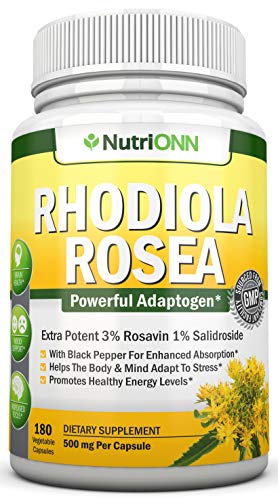
Rhodiola’s antioxidant activity is one of its most-studied properties, with hundreds of published papers examining how its compounds affect oxidative stress in cells and animals. The presence of compounds like salidroside and tyrosol, which are being explored for enhanced production in laboratory settings, points to their biological significance [9].
Energy Metabolism and Exercise Performance
Stress can impact energy levels and physical performance. Rhodiola rosea has been reviewed for its potential to enhance exercise performance, which can be indirectly related to the body’s ability to cope with physical stressors [10]. This suggests a possible influence on cellular energy metabolism.
While the exact cellular mechanisms linking Rhodiola to energy metabolism in humans require further elucidation, the adaptogenic nature implies a general supportive role in maintaining physiological balance. Improved energy utilization or resilience during physical exertion could contribute to an overall better capacity to manage daily demands and reduce the perception of fatigue associated with stress.
References
- Adaptogenic properties of six rasayana herbs used in Ayurvedic medicine. Phytotherapy research : PTR, 1999
- Stimulating effect of adaptogens: an overview with particular reference to their efficacy following single dose administration. Phytotherapy research : PTR, 2005
- Rhodiola rosea extends lifespan and improves stress tolerance in silkworm, Bombyx mori. Biogerontology, 2016
- System-Level, Molecular and Cellular Mechanisms of Selected Plant Adaptogens-A Review. Nutrients, 2026
- Antidepressant-like effects of salidroside on olfactory bulbectomy-induced pro-inflammatory cytokine production and hyperactivity of HPA axis in rats. Pharmacology, biochemistry, and behavior, 2014
- Anti-Neuroinflammatory Effects of Adaptogens: A Mini-Review. Molecules (Basel, Switzerland), 2024
- Rhodiola rosea L. modulates inflammatory processes in a CRH-activated BV2 cell model. Phytomedicine : international journal of phytotherapy and phytopharmacology, 2020
- Effect of salidroside on neuroprotection and psychiatric sequelae during the COVID-19 pandemic: A review. Biomedicine & pharmacotherapy = Biomedecine & pharmacotherapie, 2024
- Adaptive Laboratory Evolution for Enhanced Tyrosol Tolerance Enables High-Titer Salidroside Production in Escherichia coli. ACS synthetic biology, 2026
- Rhodiola rosea as an adaptogen to enhance exercise performance: a review of the literature. The British journal of nutrition, 2024
These statements have not been evaluated by the Food and Drug Administration. This information is not intended to diagnose, treat, cure, or prevent any disease. Content is for informational purposes only and is not medical advice; consult a qualified healthcare provider before starting any supplement. As an Amazon Associate we earn from qualifying purchases.
