For women navigating midlife and menopause, understanding the quality of botanical supplements like Rhodiola rosea is often a priority. When considering Rhodiola rosea, questions about its origin and how that might impact its effectiveness are common and well-founded.
The conditions under which a plant grows can influence its chemical composition, and Rhodiola rosea is no exception. Exploring the role of geographical origin can help in making informed choices about this adaptogenic herb.
Rhodiola Rosea: A High-Altitude Plant
Rhodiola rosea is a plant that naturally thrives in high-altitude, cold regions across the Northern Hemisphere. Its traditional growing areas include parts of Europe, Asia, and North America [1]. These harsh environments are thought to contribute to the plant’s unique profile of beneficial compounds.
The plant’s ability to adapt to challenging conditions, such as those found in the Altai Mountains, is reflected in its chemical makeup [2]. This natural resilience is part of what makes it an interesting subject for study, particularly concerning its potential to support well-being during periods of change like midlife and menopause.
Key Compounds: Rosavins and Salidroside
The primary compounds often associated with Rhodiola rosea’s studied effects are rosavins and salidroside [3]. These active constituents are typically standardized in quality Rhodiola rosea extracts. The presence and concentration of these compounds can vary depending on various factors, including where the plant is cultivated.
Research indicates that the accumulation of secondary metabolites, including these important compounds, can differ even within cultivated Rhodiola rosea plants grown in specific regions, such as Western Siberia [4]. This suggests that while the species is the same, regional growing conditions can play a role in the plant’s chemical profile.
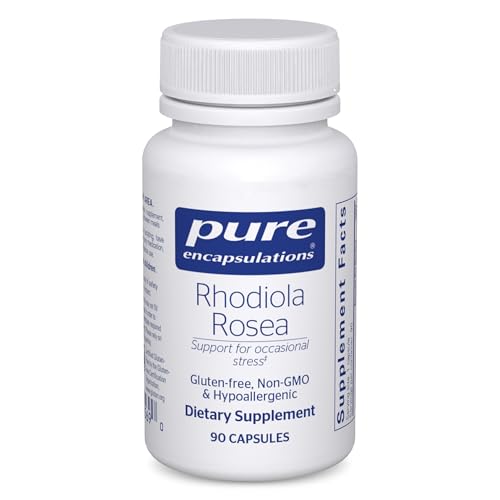

Wild vs. Cultivated Rhodiola Rosea
Historically, Rhodiola rosea was primarily harvested from wild populations. However, due to increasing demand and concerns about sustainability, wild populations of Rhodiola rosea have faced threats from overharvesting [5]. This has led to a growing interest in cultivated Rhodiola rosea.
Cultivation efforts are underway in various locations, including Poland, to produce Rhodiola rosea and even related species like Rhodiola kirilowii [6]. The aim of cultivation is often to ensure a consistent supply and potentially to optimize the production of desired compounds. However, whether cultivated plants consistently match the chemical profiles of their wild counterparts from traditional high-altitude regions is a topic of ongoing research.
Studies have explored the potential of field cultivation for Rhodiola rosea, with a focus on its potential health benefits [6]. The goal is to develop sustainable sourcing methods while maintaining the quality and characteristic compounds of the plant.
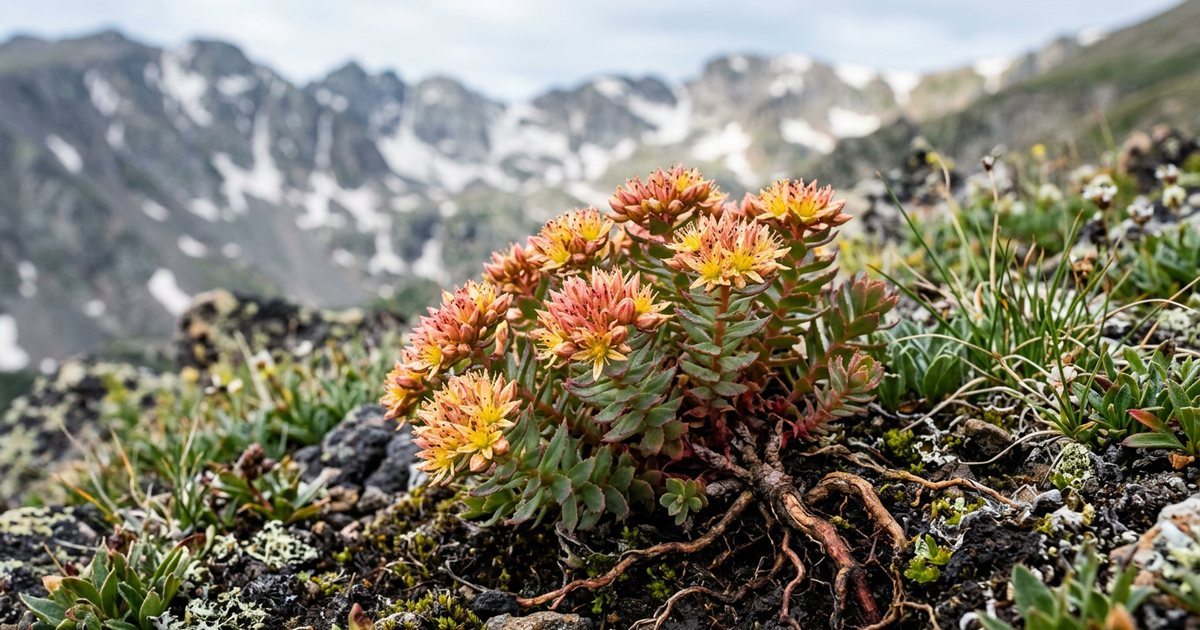
Environmental Factors and Chemical Composition
The specific environmental conditions of a plant’s growing location—such as soil composition, altitude, temperature, and light exposure—can significantly influence its chemical makeup. For Rhodiola rosea, these factors are believed to impact the synthesis and accumulation of its active compounds [4].
For instance, Rhodiola rosea from the Altai Mountains has been studied for its phenolic compounds and elemental composition, suggesting distinct profiles can emerge from specific geographical regions [2]. This highlights why the rhodiola geographical origin is often considered by those seeking high-quality supplements.

Ensuring the authenticity and quality of Rhodiola rosea products is crucial, regardless of whether they are wild-harvested or cultivated [3]. This often involves laboratory analysis to verify the presence and concentration of key active compounds like rosavins and salidroside.
Sourcing High-Quality Rhodiola Rosea
When considering Rhodiola rosea, looking for products that specify the rhodiola geographical origin can be helpful. However, beyond origin, it’s also important to consider the standardization of the extract. High-quality Rhodiola rosea supplements are typically standardized to contain specific percentages of rosavins and salidroside [3].
This standardization helps ensure a consistent amount of the active compounds in each dose, regardless of the plant’s specific growing location, although the origin may still influence the overall spectrum of compounds. For example, research on Rhodiola rosea and its potential applications, such as in relation to Alzheimer’s Disease, emphasizes the importance of understanding the plant from ‘farm to pharmacy’ to ensure quality and consistency [7].
While studies have explored Rhodiola rosea’s effects on various aspects of well-being, including its potential role in managing fatigue and supporting exercise performance [8][9], the consistency of the product is key. Choosing a reputable brand that provides third-party testing and transparency about its sourcing and standardization practices can be a sensible approach.

References
- Pharmaceutical Potential of High-Altitude Plants for Fatigue-Related Disorders: A Review. Plants (Basel, Switzerland), 2022
- Phenolic Compounds and Elemental Composition of Rhodiola rosea (Crassulaceae) from Altai Mountains. Doklady biological sciences : proceedings of the Academy of Sciences of the USSR, Biological sciences sections, 2026
- The authenticity and quality of Rhodiola rosea products. Phytomedicine : international journal of phytotherapy and phytopharmacology, 2016
- Individual Differences in Growth and in Accumulation of Secondary Metabolites in Rhodiola rosea Cultivated in Western Siberia. International journal of molecular sciences, 2023
- Running out of time to smell the roseroots: Reviewing threats and trade in wild Rhodiola rosea L. Journal of ethnopharmacology, 2021
- Approaches of Rhodiola kirilowii and Rhodiola rosea field cultivation in Poland and their potential health benefits. Annals of agricultural and environmental medicine : AAEM, 2015
- Rhodiola rosea L. and Alzheimer’s Disease: From Farm to Pharmacy. Phytotherapy research : PTR, 2016
- The effectiveness and efficacy of Rhodiola rosea L.: a systematic review of randomized clinical trials. Phytomedicine : international journal of phytotherapy and phytopharmacology, 2011
- Salidroside and exercise performance in healthy active young adults – an exploratory, randomized, double-blind, placebo-controlled study. Journal of the International Society of Sports Nutrition, 2024
These statements have not been evaluated by the Food and Drug Administration. This information is not intended to diagnose, treat, cure, or prevent any disease. Content is for informational purposes only and is not medical advice; consult a qualified healthcare provider before starting any supplement. As an Amazon Associate we earn from qualifying purchases.
