As women navigate the perimenopausal transition, a variety of physiological changes can occur, including shifts in cardiovascular health. Many individuals seek information on natural compounds that might support well-being during this time.
Rhodiola rosea, an adaptogenic herb, is often discussed for its potential to help the body adapt to various stressors. When considering its role in midlife, understanding any potential rhodiola blood pressure effects is a common area of inquiry, though evidence is currently limited.
Understanding Rhodiola Rosea
Rhodiola rosea is recognized as a plant adaptogen, a classification of herbs thought to help the body maintain balance and adapt to stress [1]. It has been a subject of interest in traditional practices and modern research for various potential health applications, including its influence on cardiovascular health [2].
The plant contains several bioactive compounds, with salidroside being one of the most studied. These compounds are believed to contribute to the herb’s potential effects on different bodily systems. For women in perimenopause, understanding these potential influences, particularly concerning cardiovascular parameters like blood pressure, is important.

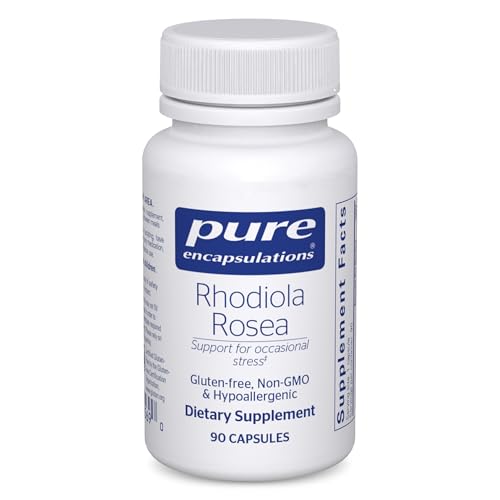
Rhodiola Blood Pressure Effects: What the Research Suggests
Research into rhodiola blood pressure effects is still in early stages and often involves animal models or specific conditions. For instance, some studies have explored the impact of salidroside, a compound found in Rhodiola, on blood pressure regulation. In diabetic rats, salidroside was observed to contribute to reducing blood pressure and alleviating cerebrovascular contractile activity by inhibiting L-type calcium channels in smooth muscle cells [3]. Additionally, salidroside pre-treatment has been shown to inhibit hypertensive renal injury and fibrosis in an animal model [4].

Other studies have investigated Rhodiola’s components in the context of specific cardiovascular conditions. For example, salidroside has demonstrated a protective effect on pulmonary artery endothelial cells against hypoxia-induced apoptosis [5]. Bioactive compound combinations from Rhodiola tangutica were also found to alleviate pulmonary vascular remodeling in high-altitude pulmonary hypertension rats [6]. These findings, while interesting, are from preclinical studies and may not directly translate to general blood pressure regulation in humans.
A study from 2006 evaluated Rhodiola crenulata and Rhodiola rosea for the management of type II diabetes and hypertension, indicating an area of ongoing investigation [7]. However, specific details on direct blood pressure modulation in healthy human populations, particularly perimenopausal women, have not been established in the published research.
Cardiovascular Health in Perimenopause
The perimenopausal period is characterized by fluctuating hormone levels, which can influence various physiological systems, including the cardiovascular system. Changes in blood pressure can be a concern for some women during this time. While Rhodiola rosea is being explored for its potential cardiovascular benefits, it’s crucial to understand that direct, conclusive evidence regarding its specific impact on blood pressure in perimenopausal women is absent from the published literature.


The potential for Rhodiola rosea to support metabolic processes has also been investigated. A study on rats fed an excessively fat diet showed effects of Rhodiola rosea rhizome on metabolic processes and physiological activity [8]. While this touches on metabolic health, which is interconnected with cardiovascular well-being, it does not directly address general blood pressure regulation in humans experiencing perimenopause.
Important Considerations for Perimenopausal Women
Given the limited direct evidence on rhodiola blood pressure effects in perimenopausal women, it’s important to approach its use with careful consideration. The adaptogenic properties of Rhodiola rosea are often linked to stress response, and managing stress can indirectly support overall well-being, which might include cardiovascular health for some individuals.
However, the research cited predominantly focuses on specific disease models or isolated compounds, rather than broad blood pressure effects in healthy or perimenopausal human populations. Therefore, any potential benefits related to blood pressure for women in midlife remain largely theoretical.
References
- Rhodiola rosea: a possible plant adaptogen. Alternative medicine review : a journal of clinical therapeutic, 2001
- Rhodiola rosea: A Therapeutic Candidate on Cardiovascular Diseases. Oxidative medicine and cellular longevity, 2022
- Salidroside contributes to reducing blood pressure and alleviating cerebrovascular contractile activity in diabetic Goto-Kakizaki Rats by inhibition of L-type calcium channel in smooth muscle cells. BMC pharmacology & toxicology, 2017
- Salidroside Pre-Treatment Inhibits Hypertensive Renal Injury and Fibrosis Through Inhibiting Wnt/β-Catenin Pathway. Dose-response : a publication of International Hormesis Society, 2024
- Salidroside protects pulmonary artery endothelial cells against hypoxia-induced apoptosis via the AhR/NF-κB and Nrf2/HO-1 pathways. Phytomedicine : international journal of phytotherapy and phytopharmacology, 2024
- Bioactive compound combinations from Rhodiola tangutica alleviate pulmonary vascular remodeling in high-altitude pulmonary hypertension rats through the PI3K-AKT pathway. Frontiers in pharmacology, 2025
- Evaluation of Rhodiola crenulata and Rhodiola rosea for management of type II diabetes and hypertension. Asia Pacific journal of clinical nutrition, 2006
- Effect of Rhodiola rosea Rhizome and Punica granatum Fruit Peel on the Metabolic Processes and Physiological Activity of Rats Fed with Excessively Fat Diet. Food technology and biotechnology, 2023
These statements have not been evaluated by the Food and Drug Administration. This information is not intended to diagnose, treat, cure, or prevent any disease. Content is for informational purposes only and is not medical advice; consult a qualified healthcare provider before starting any supplement. As an Amazon Associate we earn from qualifying purchases.
