For women navigating midlife and menopause, understanding how to best incorporate supplements like rhodiola rosea can be a common question. One aspect that often arises is whether it’s more beneficial to take rhodiola on an empty stomach or with food.
Currently, specific research directly comparing the effects of rhodiola rosea intake on an empty stomach versus with food in humans is limited. However, we can look at what is known about its compounds and general absorption considerations to provide some guidance.
Understanding Rhodiola Rosea Compounds
Rhodiola rosea is recognized as an adaptogen, containing various bioactive compounds that are thought to contribute to its properties [1]. Key active components include rosavins and salidroside.
Some of these compounds, such as salidroside, have been studied for their properties, and methods for their production have been explored [2]. Another related compound, tyrosol, has also been reviewed for potential modifications to improve functionality, considering both hydrophilic and lipophilic pathways [3]. This suggests that rhodiola contains compounds with varying solubility characteristics.


Considerations for Absorption: General Principles
The absorption of compounds can be influenced by several factors, including their solubility. Compounds that are more water-soluble (hydrophilic) might be readily absorbed in the presence of water, while those that are fat-soluble (lipophilic) may benefit from being taken with food, particularly meals containing some fat, to aid absorption.
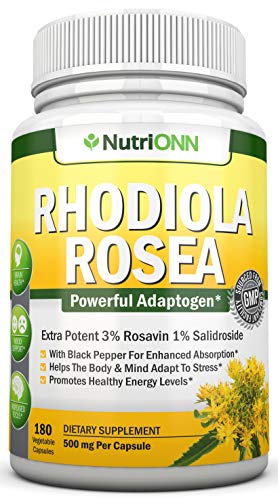
Given that rhodiola contains a mix of compounds, some of which may be more hydrophilic and others potentially more lipophilic, the ideal timing might not be straightforward. For example, salidroside has been formulated into W/O/W emulsions, suggesting considerations for its delivery and potential interactions with other substances [4].
Rhodiola Rosea and Digestion: What We Don’t Know Yet
While general principles of absorption exist, there is no definitive research specifically detailing how taking rhodiola rosea on an empty stomach versus with food impacts the absorption or effectiveness of its active compounds in humans. This means that recommendations are largely based on general supplement guidelines and anecdotal reports rather than direct scientific evidence for this particular herb.
Some anecdotal reports suggest that taking rhodiola on an empty stomach may lead to faster onset of effects for some individuals, while others find that taking it with food helps to minimize potential mild stomach upset. These are individual experiences and not supported by controlled studies on rhodiola absorption timing.
Practical Approaches for Women in Midlife and Menopause
Without specific evidence, a practical approach for women in midlife and menopause is to consider individual tolerance and preferences. If you find that taking rhodiola rosea on an empty stomach causes any digestive discomfort, trying it with a light meal might be a sensible adjustment.

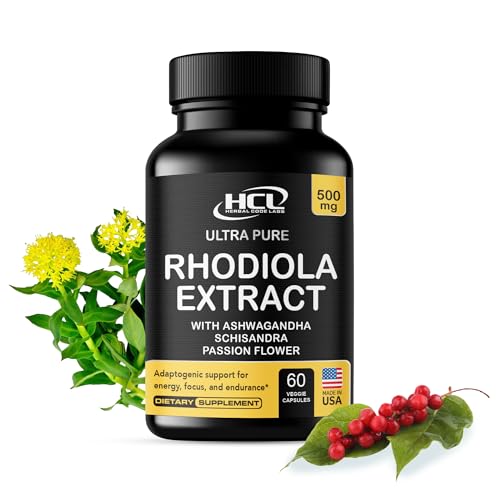
Conversely, if you experience no issues on an empty stomach, continuing that routine may be perfectly suitable. It’s often recommended to start with a lower dose to assess tolerance, regardless of meal timing, and then gradually adjust as needed while observing how your body responds.
Rhodiola Empty Stomach: Current Limited Understanding
The current understanding regarding taking rhodiola empty stomach is limited. While some compounds, like tyrosol, have been reviewed for their hydrophilic and lipophilic pathways [3], indicating a mix of solubility characteristics within rhodiola’s components, direct studies on how meal timing impacts the overall absorption and physiological effects of rhodiola rosea are not available.
Therefore, any advice on rhodiola empty stomach is largely speculative without specific research. Women should consider their personal comfort and any guidance from their healthcare provider when deciding on the best timing for their rhodiola rosea intake.
References
- Rhodiola rosea: A Versatile Adaptogen. Comprehensive reviews in food science and food safety, 2005
- Production of Cinnamyl Alcohol Glucoside from Glucose in Escherichia coli. Journal of agricultural and food chemistry, 2017
- Tyrosol Modifications for Improved Functionality: A Review of Hydrophilic and Lipophilic Pathways and Their Potential Applications. Journal of agricultural and food chemistry, 2025
- Fabrication and characterization of salidroside W/O/W emulsion with sodium alginate. Food chemistry: X, 2024
These statements have not been evaluated by the Food and Drug Administration. This information is not intended to diagnose, treat, cure, or prevent any disease. Content is for informational purposes only and is not medical advice; consult a qualified healthcare provider before starting any supplement. As an Amazon Associate we earn from qualifying purchases.
